By using this site, you agree to the Privacy Policy and Terms And Conditions. We use cookies to enhance your browsing experience, serve personalized ads or content, and analyze our traffic. By clicking "Accept All", you consent to our use of cookies.
Accept
Khaga PharmacyKhaga PharmacyKhaga Pharmacy
  • HomeHome
  • Health BlogHealth Blog
    • NeuroscienceNeuroscience
  • Health NewsHealth News
  • Web StoriesWeb Stories
  • PagesPages
    • BookmarksBookmarks
    • About UsAbout Us
Reading: Understanding sleep apnea symptoms and risk factors
Share
Notification Show More
Font ResizerAa
Khaga PharmacyKhaga Pharmacy
Font ResizerAa
  • Health BlogHealth Blog
  • NeuroscienceNeuroscience
  • Health NewsHealth News
  • BookmarksBookmarks
Search
  • HomeHome
  • Health BlogHealth Blog
  • NeuroscienceNeuroscience
  • Health NewsHealth News
  • Web StoriesWeb Stories
  • PagesPages
    • BookmarksBookmarks
    • About UsAbout Us
Follow US
  • Contact Us
  • Privacy Policy
  • Terms And Conditions
  • About Us
  • Affiliation
  • Disclaimer
  • Editorial Policy
  • Use Of Cookies
© 2024 khagapharmacy.com
Khaga Pharmacy > Health Blog > Understanding sleep apnea symptoms and risk factors
Health Blog

Understanding sleep apnea symptoms and risk factors

Breathing pauses, loud snoring, and daytime drowsiness can help explain when to discuss sleep concerns with a clinician.

Rahul Priydarss
Last updated: 10 November 2026 12:28 AM
Rahul Priydarss
7 hours ago
Share
5 Min Read
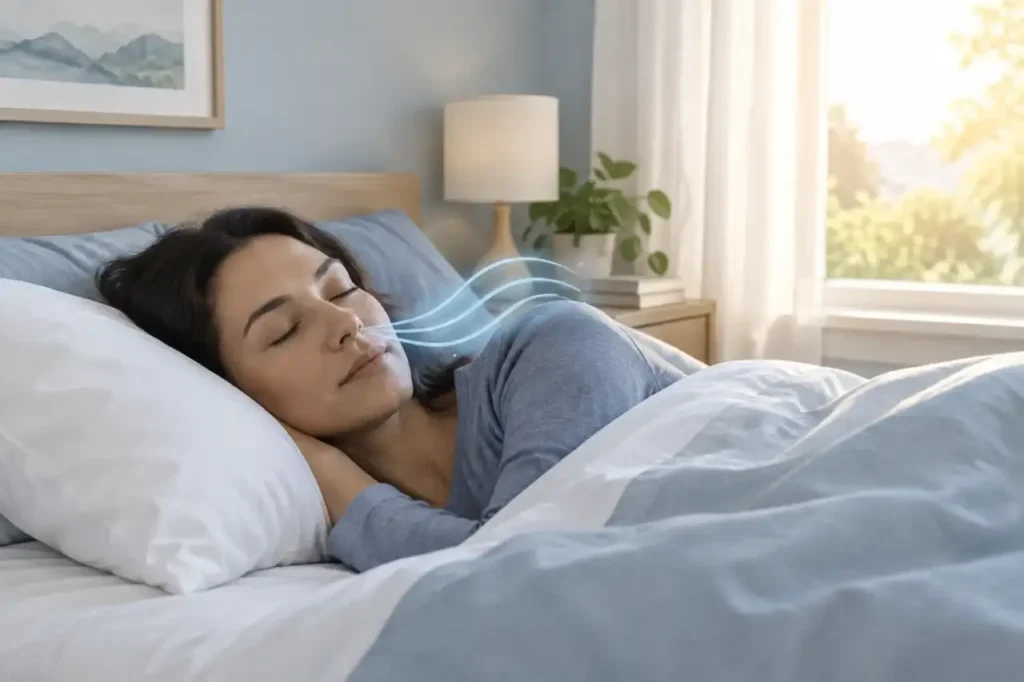
sleep apnea symptoms — Illustration of an adult sleeping in a bedroom with an abstract airflow motif.
SHARE
Highlights
  • Sleep apnea can cause repeated breathing pauses, loud snoring, and daytime drowsiness.
  • Risk factors include being overweight, being male, having small airways, and a family history.
  • Diagnosis involves medical and family histories, a physical exam, and sleep study results.

Sleep apnea symptoms can include loud snoring, repeated pauses in breathing during sleep, and daytime drowsiness. These signs are useful to understand if you have concerns about your sleep or notice breathing interruptions in someone close to you. Snoring alone, however, does not establish that a person has sleep apnea.

Contents
Sleep apnea symptoms: what to recognizeLoud snoring is a clue, not a diagnosisDaytime drowsiness can reflect interrupted sleepWho has a higher risk of sleep apnea?When to seek professional medical adviceWhy diagnosis and treatment matterFrequently Asked QuestionsDoes loud snoring always mean sleep apnea?Can children have sleep apnea?Can sleep apnea be treated?

According to MedlinePlus, the National Library of Medicine’s sleep apnea guide, sleep apnea is a common disorder in which breathing stops or becomes very shallow. Medical evaluation is needed to determine whether sleep apnea is present and what care may be appropriate.
- Advertisement -
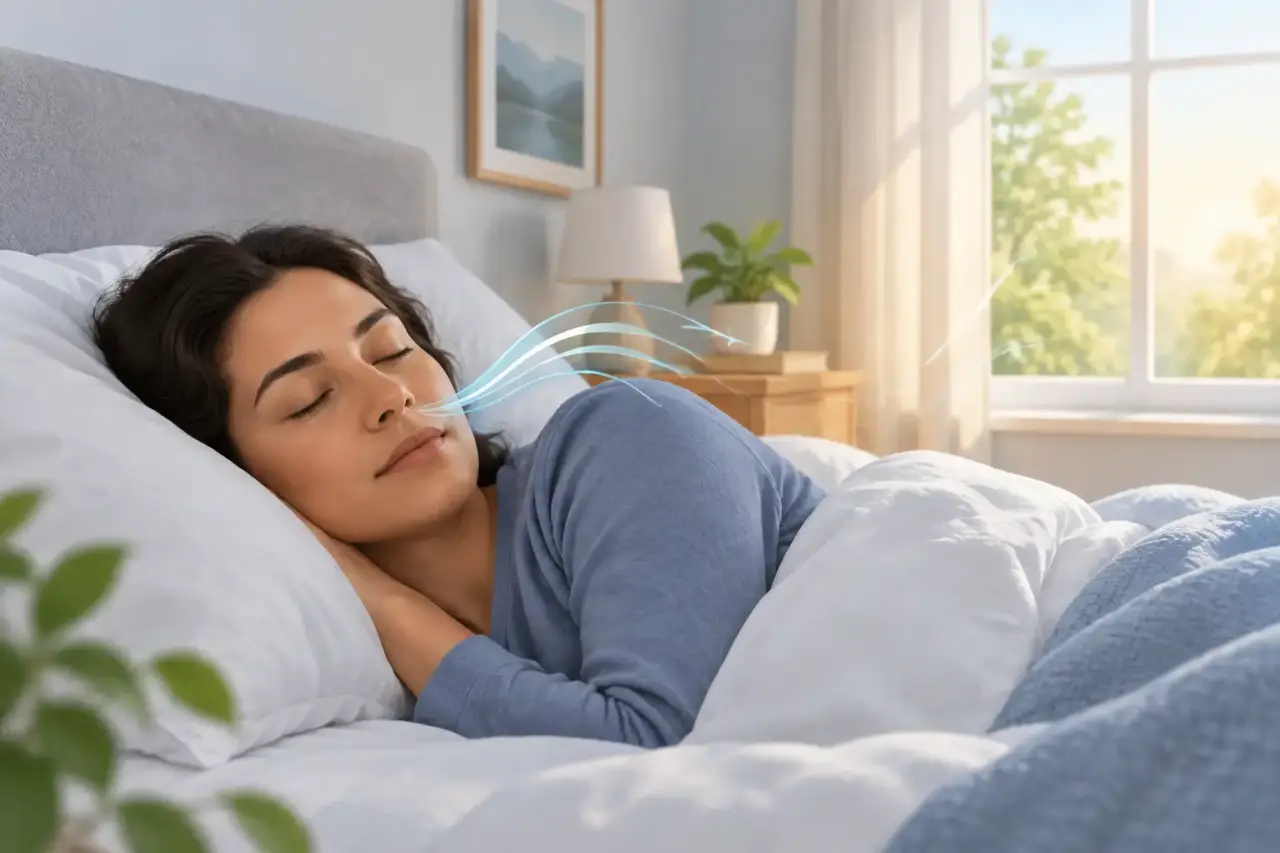
sleep apnea symptoms — Illustration of an adult sleeping in a bedroom with an abstract airflow motif.

Sleep apnea symptoms: what to recognize

Breathing pauses associated with sleep apnea can last from a few seconds to minutes. They may occur 30 times or more in an hour. These repeated interruptions can disrupt sleep and leave a person drowsy during the day.

The most common type is obstructive sleep apnea. In this form, the airway collapses or becomes blocked during sleep. When normal breathing starts again, it may be accompanied by a snort or choking sound.

Loud snoring is a clue, not a diagnosis

People with sleep apnea often snore loudly, but not everyone who snores has sleep apnea. The distinction matters: snoring should not be treated as proof of the disorder, and a diagnosis depends on more than a single symptom.

Daytime drowsiness can reflect interrupted sleep

When sleep is repeatedly interrupted throughout the night, daytime drowsiness can follow. This is more than a question of sleep quality. MedlinePlus reports that people with sleep apnea have a higher risk of car crashes, work-related accidents, and other medical problems.

- Advertisement -

Who has a higher risk of sleep apnea?

MedlinePlus identifies several factors associated with a greater risk: being overweight, being male, having a family history of sleep apnea, and having small airways. These factors can provide useful context when discussing sleep concerns with a health care provider, but they do not establish a diagnosis.

Children can also have sleep apnea. Enlarged tonsils or adenoids are a factor identified in the source. Information about sleep apnea is therefore relevant not only to adults with sleep concerns but also to parents and caregivers who have questions about a child’s breathing during sleep.

When to seek professional medical advice

Breathing pauses during sleep, loud snoring, or daytime drowsiness are reasons to discuss possible sleep apnea with a health care provider. A conversation is particularly relevant when these concerns occur alongside one or more of the risk factors described above.

Doctors diagnose sleep apnea using medical and family histories, a physical examination, and sleep study results. Symptoms and risk factors are starting points for evaluation, not substitutes for that process. A clinician can assess whether the concerns are related to sleep apnea.

- Advertisement -

Why diagnosis and treatment matter

MedlinePlus emphasizes that treatment is important for people who have sleep apnea. Treatment options include lifestyle changes, mouthpieces, surgery, and breathing devices. These approaches can treat sleep apnea in many people, but the source does not identify one option as the right choice for everyone.

For related reading about devices, see this overview of sleep apnea appliances. Device information does not replace medical evaluation or professional advice about treatment.

The practical takeaway is to recognize possible signs, understand relevant risk factors, and bring health questions to a clinician rather than trying to diagnose the condition from snoring or tiredness alone.

Frequently Asked Questions

Does loud snoring always mean sleep apnea?

No. People with sleep apnea often snore loudly, but not everyone who snores has the disorder. Diagnosis requires medical evaluation, including histories, an examination, and sleep study results.

Can children have sleep apnea?

Yes. Children with enlarged tonsils or adenoids may develop sleep apnea. Parents or caregivers with concerns about a child’s breathing during sleep should contact a health care provider.

- Advertisement -

Can sleep apnea be treated?

Yes. Lifestyle changes, mouthpieces, surgery, and breathing devices can treat sleep apnea in many people. Professional medical advice is needed to discuss appropriate options.

You Might Also Like

Buffalo Wild Wings Nutrition: Best Low-Calorie and High-Protein Picks

Simone Biles Nose Job Rumors: Debunking the False Claims

What is Tdap Vaccine: A Crucial Shot for Lifelong Protection

Best CBD Salve for Joint Pain Relief: Which Salve Works Best?

Managing Vaginal Yeast Infections: Causes, Symptoms, and Prevention Strategies

TAGGED:Sleep apneaSleep disordersSleep healthSnoring
SOURCES:MedlinePlus
Share This Article
Whatsapp Whatsapp LinkedIn Email Print
ByRahul Priydarss
Follow:
I am professional blog writer with more than 2+ year experience and write 300+ article on many website also publish my thesis on hydrogel.
Previous Article arthritis and joint pain — Illustration of an adult beside simplified knee and hand joints. Understanding arthritis and joint pain
Next Article quitting smoking — Illustration of a blank calendar, an unbranded cigarette pack, and a leafy plant on a table. A practical guide to quitting smoking: Benefits and support
Leave a Comment Leave a Comment

Leave a Reply Cancel reply

Your email address will not be published. Required fields are marked *

Find Us on Socials

- Advertisement -

Latest News

cell and gene therapy — Illustration of a biotechnology laboratory used for product quality testing.
FDA clarifies cell and gene therapy potency standards
Health News
5 hours ago
Voceryq for RRP — Illustration of the upper airways alongside abstract DNA and immune-cell imagery.
FDA Approves Voceryq for RRP Under Accelerated Pathway
Health News
5 hours ago
preventing foodborne illness — Illustration of a home kitchen with refrigerated food, fresh produce, and a wall clock.
A practical guide to preventing foodborne illness
Health Blog
5 hours ago
quitting smoking — Illustration of a blank calendar, an unbranded cigarette pack, and a leafy plant on a table.
A practical guide to quitting smoking: Benefits and support
Health Blog
7 hours ago
//

We influence 20 million users and is the number one business and technology news network on the planet

Khaga PharmacyKhaga Pharmacy
Follow US
© 2026 khagapharmacy.com
  • Contact Us
  • Privacy Policy
  • Terms And Conditions
  • About Us
  • Affiliation
  • Disclaimer
  • Editorial Policy
  • Use Of Cookies
Welcome Back!

Sign in to your account

Username or Email Address
Password

Lost your password?