By using this site, you agree to the Privacy Policy and Terms And Conditions. We use cookies to enhance your browsing experience, serve personalized ads or content, and analyze our traffic. By clicking "Accept All", you consent to our use of cookies.
Accept
Khaga PharmacyKhaga PharmacyKhaga Pharmacy
  • HomeHome
  • Health BlogHealth Blog
    • NeuroscienceNeuroscience
  • Health NewsHealth News
  • Web StoriesWeb Stories
  • PagesPages
    • BookmarksBookmarks
    • About UsAbout Us
Reading: Understanding arthritis and joint pain
Share
Notification Show More
Font ResizerAa
Khaga PharmacyKhaga Pharmacy
Font ResizerAa
  • Health BlogHealth Blog
  • NeuroscienceNeuroscience
  • Health NewsHealth News
  • BookmarksBookmarks
Search
  • HomeHome
  • Health BlogHealth Blog
  • NeuroscienceNeuroscience
  • Health NewsHealth News
  • Web StoriesWeb Stories
  • PagesPages
    • BookmarksBookmarks
    • About UsAbout Us
Follow US
  • Contact Us
  • Privacy Policy
  • Terms And Conditions
  • About Us
  • Affiliation
  • Disclaimer
  • Editorial Policy
  • Use Of Cookies
© 2024 khagapharmacy.com
Khaga Pharmacy > Health Blog > Understanding arthritis and joint pain
Health Blog

Understanding arthritis and joint pain

Different joint conditions can cause similar symptoms, making an accurate diagnosis important for choosing appropriate care.

Rahul Priydarss
Last updated: 10 November 2026 12:24 AM
Rahul Priydarss
8 hours ago
Share
5 Min Read
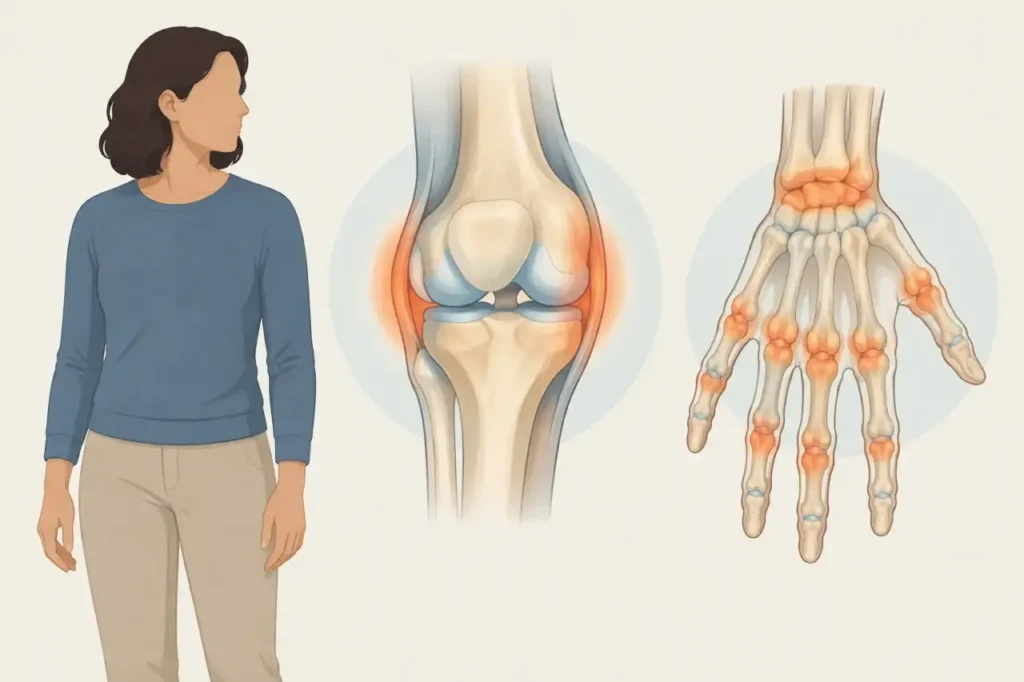
arthritis and joint pain — Illustration of an adult beside simplified knee and hand joints.
SHARE
Highlights
  • Arthritis includes different joint disorders, and treatment depends on the type.
  • Common symptoms include joint pain, swelling, redness, warmth, and reduced movement.
  • Evaluation may include a medical history, physical exam, blood tests, or X-rays.

Understanding arthritis and joint pain starts with recognizing that arthritis is not one single condition. The term often describes disorders that affect joints—the places where two bones meet, such as the knees and elbows. Most types can cause pain and inflammation, or swelling, and may make movement difficult. For related background, see Do Statins Cause Joint Pain: Should You Be Concerned?.

Contents
What arthritis and joint pain can feel likeCommon types of arthritisWho is more likely to develop arthritis?How a provider evaluates joint symptomsTreatment and symptom-management optionsFrequently Asked QuestionsDoes joint pain always mean arthritis?Can children have arthritis?Does everyone with arthritis need surgery?

This guide is useful for people noticing joint symptoms, those learning about an arthritis diagnosis, and family members helping someone navigate care. According to MedlinePlus’s overview of arthritis, treatment depends on which type a person has.
- Advertisement -
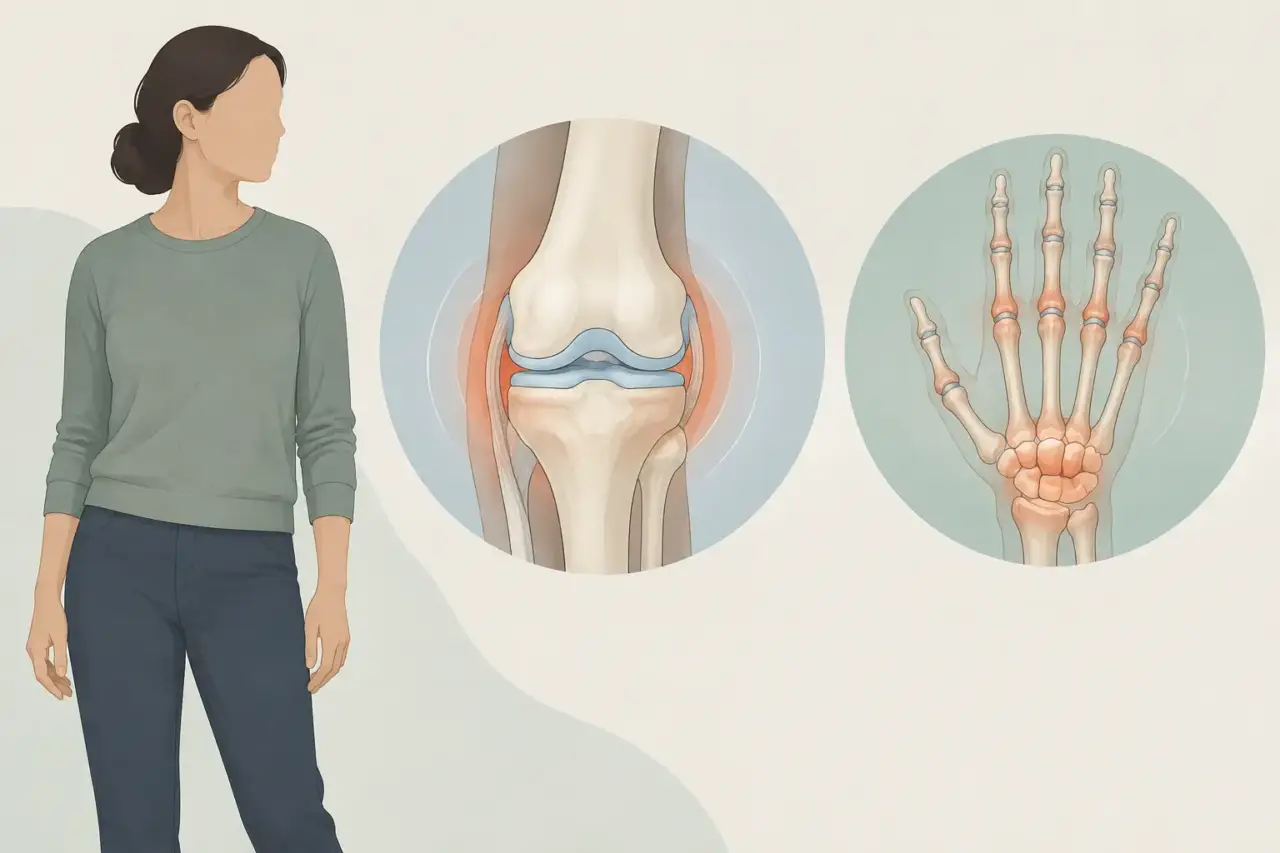
arthritis and joint pain — Illustration of an adult beside simplified knee and hand joints.

What arthritis and joint pain can feel like

Common arthritis symptoms include pain, redness, warmth, and swelling around a joint. The joint may not move as well as it should. Stiffness and difficulty moving around can also be clues that a joint problem needs evaluation.

Some people have symptoms beyond their joints, including fever, weight loss, breathing difficulties, or a rash. Certain types of arthritis can also affect organs or tissues such as the eyes or skin. Over time, a swollen joint can become severely damaged.

These symptoms do not establish a diagnosis by themselves. MedlinePlus notes that some arthritis symptoms may also be signs of other illnesses.

Common types of arthritis

Different forms of arthritis have different causes and patterns. Common types described by MedlinePlus include:

- Advertisement -
  • Osteoarthritis: The most common type, often related to aging or injury.
  • Autoimmune arthritis: Occurs when the immune system mistakenly attacks healthy cells. Rheumatoid arthritis is the most common form of autoimmune arthritis.
  • Juvenile arthritis: Arthritis that occurs in children.
  • Infectious arthritis: An infection that has spread from another part of the body to a joint.
  • Psoriatic arthritis: Affects people with psoriasis, which can cause itchy or sore, scaly skin patches.
  • Gout: A painful type associated with too much uric acid building up in the body. It often starts in the big toe but can affect other joints.
  • Ankylosing spondylitis: A type affecting the spine that can cause stiffness and difficulty moving or bending.

Who is more likely to develop arthritis?

The likelihood of developing many types of arthritis increases with age, but arthritis also occurs in children. Family history can increase the likelihood of certain types. Some forms are more common in women, while others are more common in men.

Other factors associated with increased risk include a previous joint injury, obesity, and lupus. Having a risk factor is not the same as having a diagnosis; a health care provider evaluates symptoms and medical history.

How a provider evaluates joint symptoms

A health care provider may ask about symptoms and medical history, perform a physical examination, and order blood tests or X-rays. The provider may also refer someone to a rheumatologist, a doctor who specializes in arthritis care, for testing, diagnosis, and ongoing care.

For readers exploring discomfort in a particular area, our related guide discusses sacroiliac joint pain. Location alone does not replace the evaluation used to identify a joint condition.

- Advertisement -

Treatment and symptom-management options

Arthritis treatment depends on the type and may include medicine or surgery. A provider works with the patient to improve symptoms and quality of life.

MedlinePlus lists hot or cold packs, relaxation techniques, and splints, braces, or assistive devices as ways to help manage symptoms. These are options to discuss with a provider rather than a single treatment plan suitable for every form of arthritis.

If you have questions about joint pain, swelling, stiffness, or other health symptoms, contact a health care provider. Professional evaluation is important because similar symptoms can have different causes. This information does not replace medical care or advice.

Related reading: Best CBD Salve for Joint Pain Relief: Which Salve Works Best?

Frequently Asked Questions

Does joint pain always mean arthritis?

No. Symptoms associated with arthritis can also be signs of other illnesses. A provider can assess the symptoms and determine whether testing is needed.

- Advertisement -

Can children have arthritis?

Yes. Juvenile arthritis occurs in children, even though the risk of many other arthritis types increases with age.

Does everyone with arthritis need surgery?

No. Treatment depends on the type of arthritis. MedlinePlus lists medicine and surgery as possible treatments, along with options to help manage symptoms.

You Might Also Like

Nutrilite Omega-3 Empowering Your Health Goals Through Advanced Nutrition

Neck Pain: Causes, Symptoms, and natural Treatment

Pain in the Vaginal Area During Pregnancy

Does Fresca Have Caffeine? A perfect 2024 exploration

Nose Job Recovery Time: How to Heal Faster and Better

TAGGED:ArthritisJoint healthjoint painRheumatology
SOURCES:MedlinePlus
Share This Article
Whatsapp Whatsapp LinkedIn Email Print
ByRahul Priydarss
Follow:
I am professional blog writer with more than 2+ year experience and write 300+ article on many website also publish my thesis on hydrogel.
Previous Article childhood nutrition — Child-sized meal with fruits, vegetables, whole-grain bread, lean protein, and water. A guide to childhood nutrition and healthy growth
Next Article sleep apnea symptoms — Illustration of an adult sleeping in a bedroom with an abstract airflow motif. Understanding sleep apnea symptoms and risk factors
Leave a Comment Leave a Comment

Leave a Reply Cancel reply

Your email address will not be published. Required fields are marked *

Find Us on Socials

- Advertisement -

Latest News

cell and gene therapy — Illustration of a biotechnology laboratory used for product quality testing.
FDA clarifies cell and gene therapy potency standards
Health News
5 hours ago
Voceryq for RRP — Illustration of the upper airways alongside abstract DNA and immune-cell imagery.
FDA Approves Voceryq for RRP Under Accelerated Pathway
Health News
5 hours ago
preventing foodborne illness — Illustration of a home kitchen with refrigerated food, fresh produce, and a wall clock.
A practical guide to preventing foodborne illness
Health Blog
5 hours ago
quitting smoking — Illustration of a blank calendar, an unbranded cigarette pack, and a leafy plant on a table.
A practical guide to quitting smoking: Benefits and support
Health Blog
7 hours ago
//

We influence 20 million users and is the number one business and technology news network on the planet

Khaga PharmacyKhaga Pharmacy
Follow US
© 2026 khagapharmacy.com
  • Contact Us
  • Privacy Policy
  • Terms And Conditions
  • About Us
  • Affiliation
  • Disclaimer
  • Editorial Policy
  • Use Of Cookies
Welcome Back!

Sign in to your account

Username or Email Address
Password

Lost your password?