

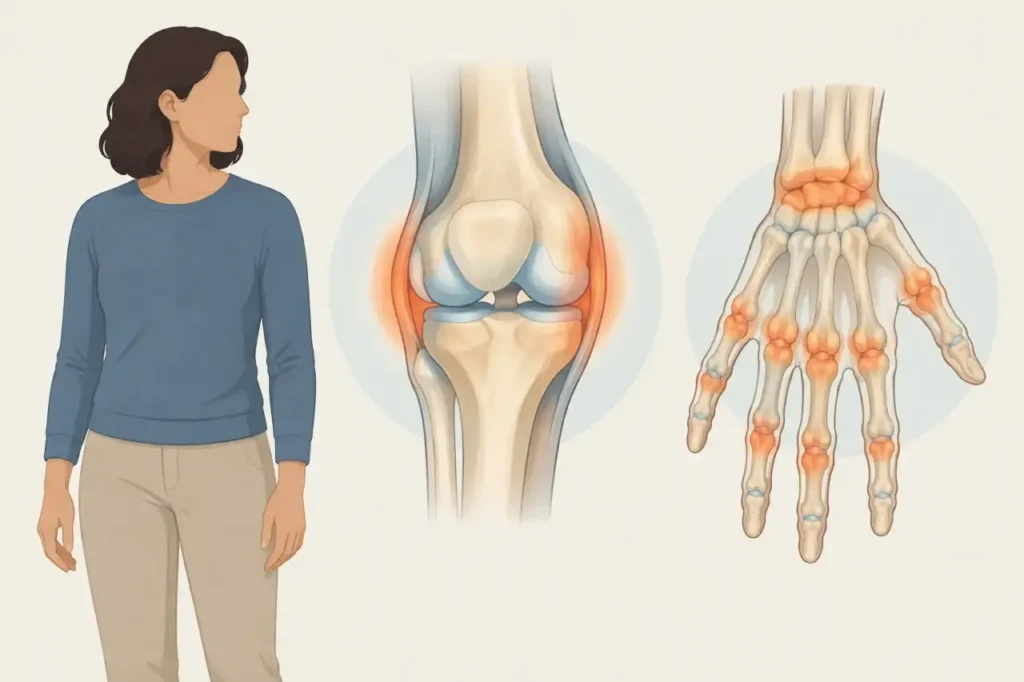
Understanding arthritis and joint pain starts with recognizing that arthritis is not one single condition. The term often describes disorders that affect joints—the places where two bones meet, such as the knees and elbows. Most types can cause pain and inflammation, or swelling, and may make movement difficult. For related background, see Do Statins Cause Joint Pain: Should You Be Concerned?.
This guide is useful for people noticing joint symptoms, those learning about an arthritis diagnosis, and family members helping someone navigate care. According to MedlinePlus’s overview of arthritis, treatment depends on which type a person has.
What arthritis and joint pain can feel like
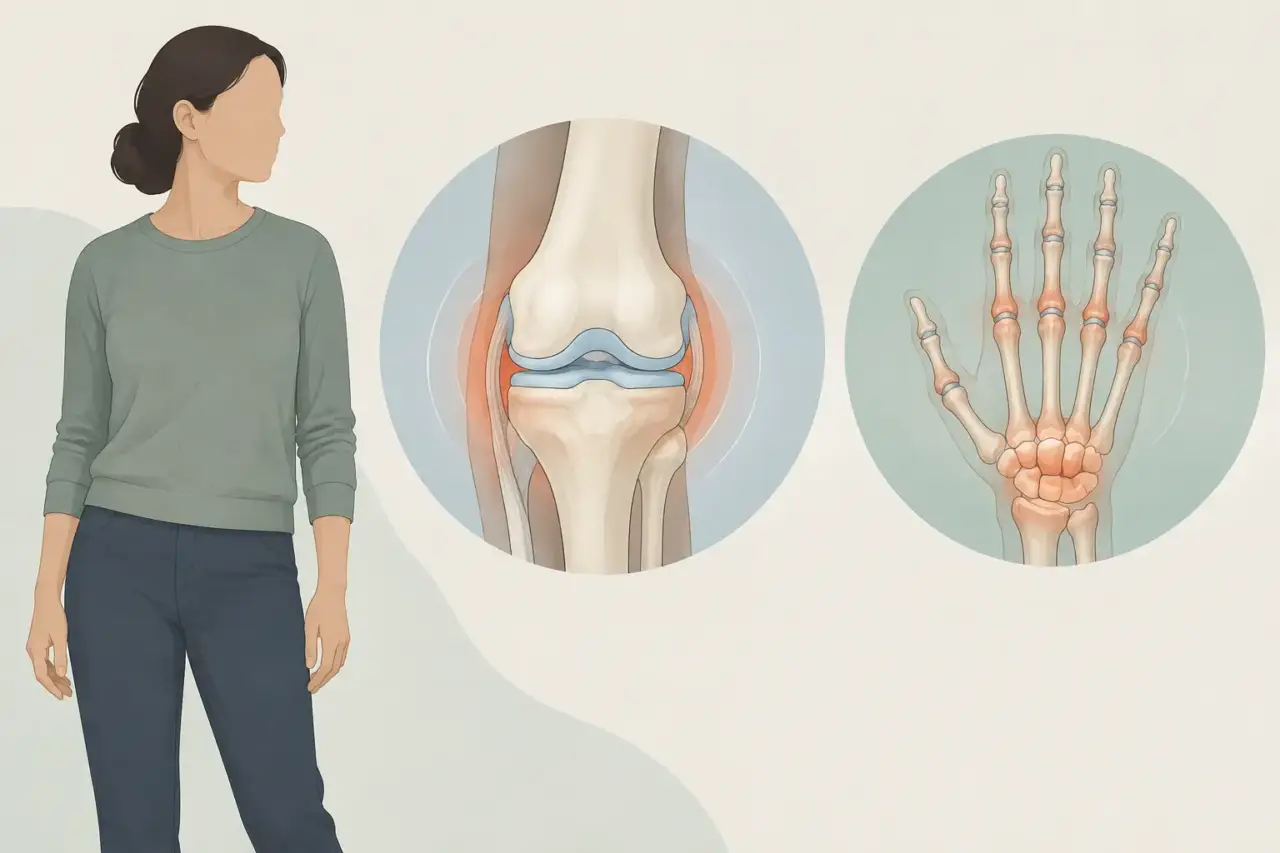
Common arthritis symptoms include pain, redness, warmth, and swelling around a joint. The joint may not move as well as it should. Stiffness and difficulty moving around can also be clues that a joint problem needs evaluation.
Some people have symptoms beyond their joints, including fever, weight loss, breathing difficulties, or a rash. Certain types of arthritis can also affect organs or tissues such as the eyes or skin. Over time, a swollen joint can become severely damaged.
These symptoms do not establish a diagnosis by themselves. MedlinePlus notes that some arthritis symptoms may also be signs of other illnesses.
Common types of arthritis
Different forms of arthritis have different causes and patterns. Common types described by MedlinePlus include:
- Osteoarthritis: The most common type, often related to aging or injury.
- Autoimmune arthritis: Occurs when the immune system mistakenly attacks healthy cells. Rheumatoid arthritis is the most common form of autoimmune arthritis.
- Juvenile arthritis: Arthritis that occurs in children.
- Infectious arthritis: An infection that has spread from another part of the body to a joint.
- Psoriatic arthritis: Affects people with psoriasis, which can cause itchy or sore, scaly skin patches.
- Gout: A painful type associated with too much uric acid building up in the body. It often starts in the big toe but can affect other joints.
- Ankylosing spondylitis: A type affecting the spine that can cause stiffness and difficulty moving or bending.
Who is more likely to develop arthritis?
The likelihood of developing many types of arthritis increases with age, but arthritis also occurs in children. Family history can increase the likelihood of certain types. Some forms are more common in women, while others are more common in men.
Other factors associated with increased risk include a previous joint injury, obesity, and lupus. Having a risk factor is not the same as having a diagnosis; a health care provider evaluates symptoms and medical history.
How a provider evaluates joint symptoms
A health care provider may ask about symptoms and medical history, perform a physical examination, and order blood tests or X-rays. The provider may also refer someone to a rheumatologist, a doctor who specializes in arthritis care, for testing, diagnosis, and ongoing care.
For readers exploring discomfort in a particular area, our related guide discusses sacroiliac joint pain. Location alone does not replace the evaluation used to identify a joint condition.
Treatment and symptom-management options
Arthritis treatment depends on the type and may include medicine or surgery. A provider works with the patient to improve symptoms and quality of life.
MedlinePlus lists hot or cold packs, relaxation techniques, and splints, braces, or assistive devices as ways to help manage symptoms. These are options to discuss with a provider rather than a single treatment plan suitable for every form of arthritis.
If you have questions about joint pain, swelling, stiffness, or other health symptoms, contact a health care provider. Professional evaluation is important because similar symptoms can have different causes. This information does not replace medical care or advice.
Related reading: Best CBD Salve for Joint Pain Relief: Which Salve Works Best?
Frequently Asked Questions
Does joint pain always mean arthritis?
No. Symptoms associated with arthritis can also be signs of other illnesses. A provider can assess the symptoms and determine whether testing is needed.
Can children have arthritis?
Yes. Juvenile arthritis occurs in children, even though the risk of many other arthritis types increases with age.
Does everyone with arthritis need surgery?
No. Treatment depends on the type of arthritis. MedlinePlus lists medicine and surgery as possible treatments, along with options to help manage symptoms.