


Healthy eating helps children grow and learn. It also helps prevent obesity and weight-related diseases, such as diabetes. For parents and caregivers, childhood nutrition involves both everyday food choices and an understanding that children’s nutrient requirements change as they get older.
The MedlinePlus guide to child nutrition offers a practical starting point: include fruits and vegetables, choose healthy protein sources and whole grains, and pay attention to cooking methods and drinks. These general recommendations can help families think through meals without treating them as an individualized diet plan.
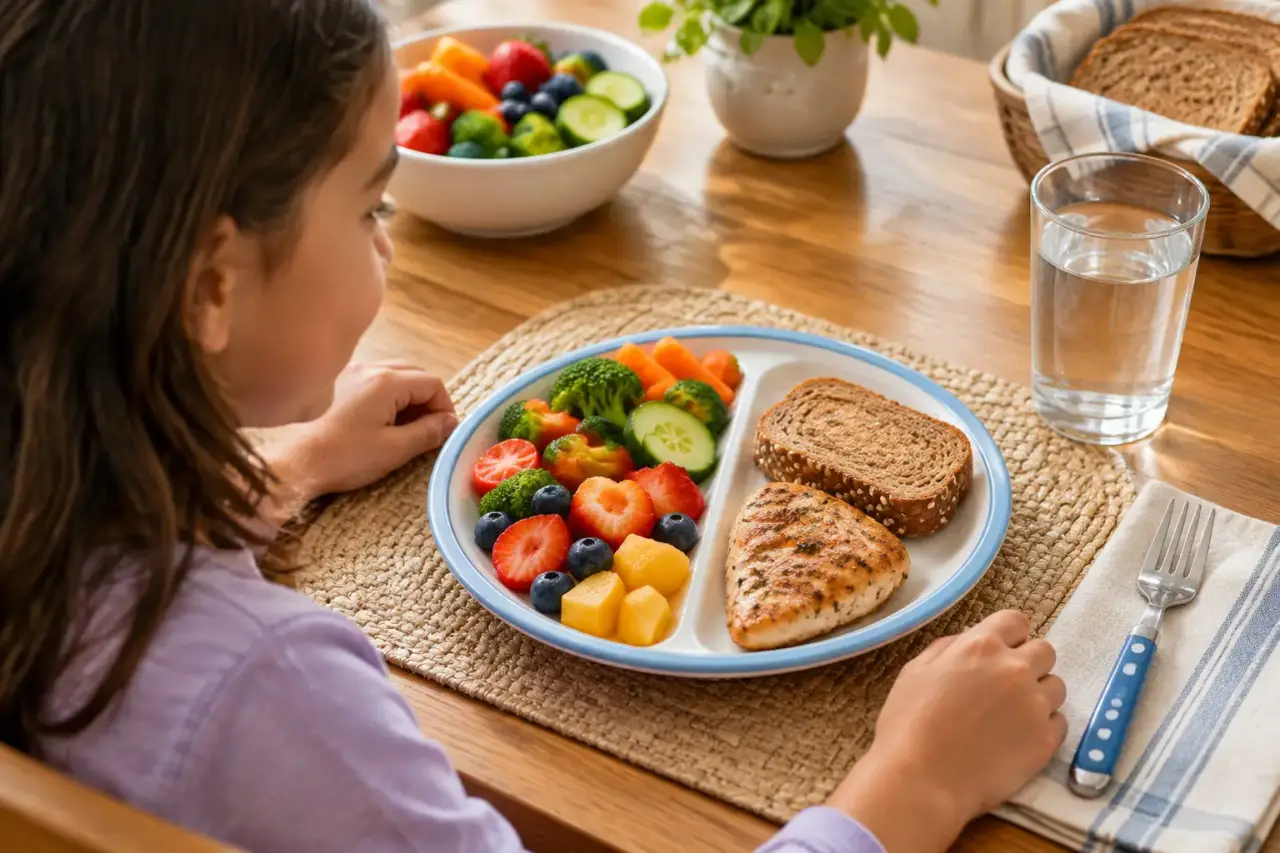
Everyday choices that support childhood nutrition
MedlinePlus outlines several ways to give a child a nutritious diet. The guidance covers what goes on the plate, how food is prepared, and what children drink.
Make half the plate fruits and vegetables
Make fruits and vegetables half of what is on your child’s plate. This is the source’s clearest visual guide for putting together a meal. It gives caregivers a straightforward place to begin when looking at the balance of foods being served.
Choose healthy protein sources
MedlinePlus lists lean meat, nuts, and eggs as examples of healthy protein sources. These examples show that protein choices are not limited to one type of food. The page also points readers toward information about protein foods for vegetarian children, though its summary does not provide a vegetarian meal plan.
Serve whole grains and reduce refined grains
Choose whole-grain breads and cereals because they are high in fiber. MedlinePlus also recommends reducing refined grains. When reviewing the breads and cereals served at home, the distinction between whole and refined grains is a useful part of the source’s guidance.
Consider cooking methods and drinks
Food preparation is another part of the recommendations. MedlinePlus advises broiling, grilling, or steaming foods instead of frying them. It also recommends limiting fast food and junk food. These points address how foods are prepared and selected, not just which food groups appear on the plate.
For beverages, offer water or milk instead of sugary fruit drinks and sodas. The summary does not specify a milk type, an age-based beverage schedule, or a daily amount. Those details should not be assumed from this general guidance.
Nutrient needs change as children grow
A nutritious diet is not only about choosing foods from broad categories. MedlinePlus encourages caregivers to learn about their children’s nutrient requirements. It specifically notes that requirements for iron and calcium change as a child ages.
The page links to further information about calcium, iron, vitamin D, fiber, fats, and other nutrition topics. Its summary does not give age-specific intake targets. For families looking for those details, the key takeaway is to seek information that fits the child’s age rather than assume nutrient needs stay the same throughout childhood.
When to seek professional guidance
This information may be useful to parents, other caregivers, and teenagers learning about healthy eating. MedlinePlus also provides routes to nutrition experts and additional educational resources.
General nutrition information is not a substitute for professional medical care or advice. Contact a health care provider with questions about a child’s health, growth, or nutritional needs. A discussion with a provider is the appropriate place to address how broad recommendations apply to an individual child.
Frequently Asked Questions
What should make up half of a child’s plate?
MedlinePlus recommends making fruits and vegetables half of what is on a child’s plate.
What drinks does MedlinePlus recommend?
Offer water or milk instead of sugary fruit drinks and sodas. The summary does not provide age-specific amounts or milk types.
Do children’s nutrient requirements change with age?
Yes. MedlinePlus specifically notes that iron and calcium requirements change as children get older. Ask a health care provider if you have questions about your child’s needs.