


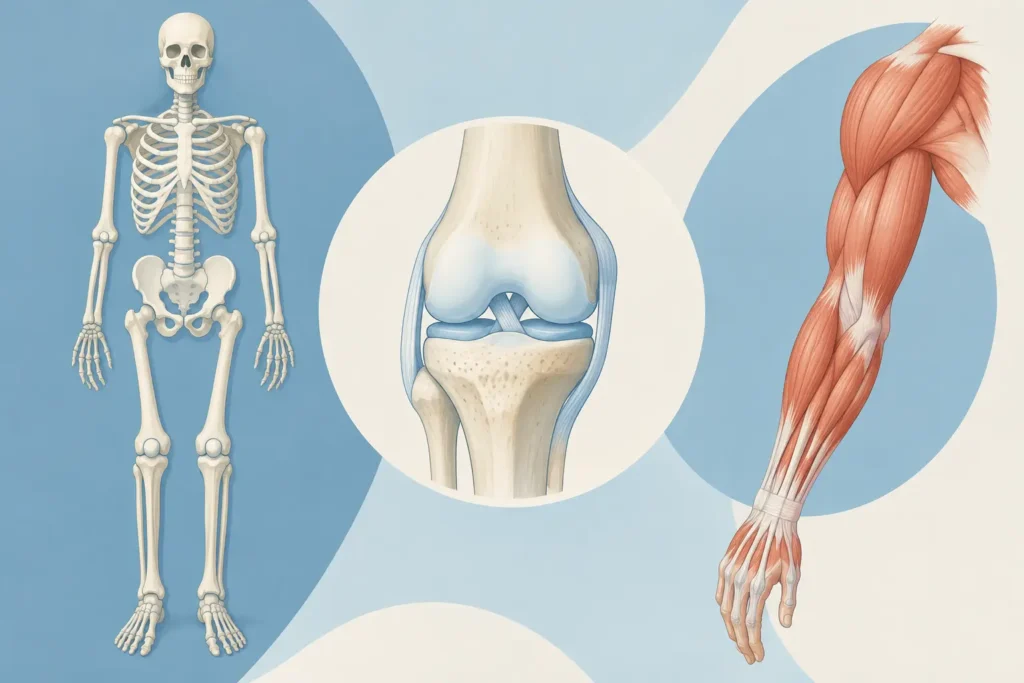
Finding reliable information about Bones, Joints and Muscles can begin with a body area, a condition name, or a familiar term such as “broken bones.” The MedlinePlus topic directory brings these entry points together, organizing links to information about injuries, diseases, symptoms, and related health topics.
The directory is useful for people learning about a diagnosis, caregivers looking up an unfamiliar term, or readers trying to locate information about a particular body part. It is a starting point for education, not a tool for determining what is causing an individual symptom.
How to Explore Bones, Joints and Muscles
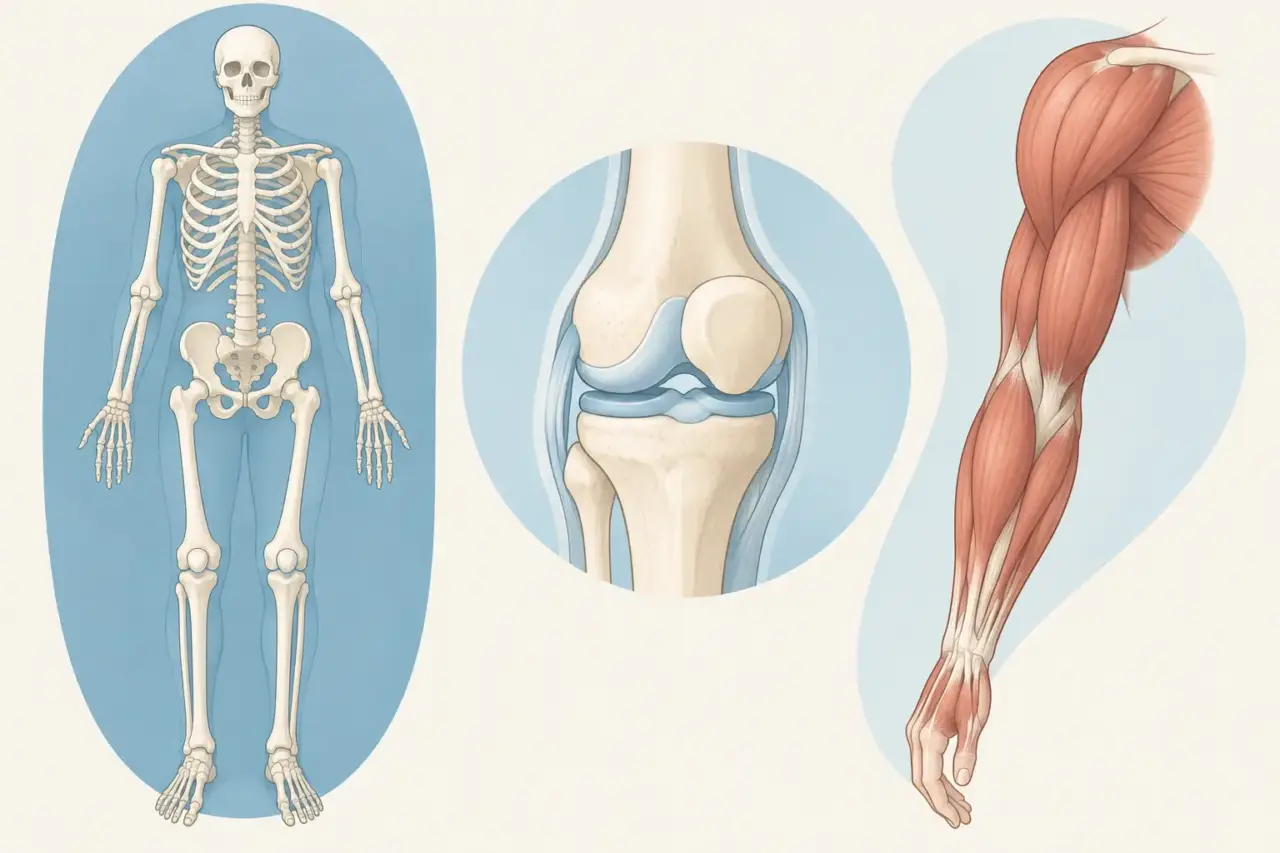
MedlinePlus organizes the page into six main sections: bones; hip, leg and foot; joints; muscles; shoulder, arm and hand; and spine. It also provides an alphabetical topic list with cross-references between related names.
If you already know the condition name, the alphabetical list offers a direct route. If you know only the body area, the regional sections provide a broader starting point. Some entries appear in more than one section, so you do not need to know the exact category before browsing.
Bone Health and Bone Conditions
The bones section includes bone density, osteoporosis, fractures, calcium, bone infections, and bone diseases. It also lists less familiar conditions, including osteogenesis imperfecta, Paget’s disease of bone, and rickets, alongside topics such as bone grafts and bone cancer.
The alphabetical cross-references help connect different terms. “Broken Bones” points to “Fractures,” while “Bone Loss” points to both “Bone Density” and “Osteoporosis.” “Osteopenia” also points to “Bone Density.” These links help readers locate relevant material without needing to know which heading MedlinePlus uses.
Joint Conditions and Regional Injuries
The joints section includes arthritis, bursitis, dislocations, sprains and strains, and injuries affecting areas such as the ankle, elbow, hip, knee, shoulder, and wrist. Hip replacement and knee replacement have their own entries.
Arthritis is not presented as a single topic alone. The directory also offers separate entries for osteoarthritis, rheumatoid arthritis, psoriatic arthritis, juvenile arthritis, and infectious arthritis. When a specific name appears in a medical discussion or document, looking for that exact entry can help narrow the reading.
The regional sections offer another route. For example, the hip, leg and foot section includes foot health, diabetic foot, heel injuries, and toe injuries. The shoulder, arm and hand section includes rotator cuff injuries, carpal tunnel syndrome, and hand or wrist injuries.
Muscle, Back, and Spine Topics
The muscles section lists muscle cramps, muscle disorders, muscular dystrophy, myositis, neuromuscular disorders, tendinitis, and sprains and strains. Back pain also appears in this section.
The spine section provides links for back injuries, back pain, neck injuries and disorders, herniated disk, scoliosis, spinal stenosis, and other spine conditions. It also includes a Guide to Good Posture.
Everyday terms can lead to these topics through the alphabetical list. “Charley Horse” points to “Muscle Cramps,” “Low Back Pain” points to “Back Pain,” and “Muscle Strain” points to “Sprains and Strains.”
Using the Information in a Medical Conversation
This directory identifies topics; it does not provide a symptom assessment, treatment plan, or instructions about when a particular symptom needs care. Its inclusion of calcium, posture, or joint replacement should not be read as a recommendation for a supplement, exercise, or procedure.
For questions about your own symptoms, test results, or treatment options, professional medical advice is needed rather than a topic match alone. The directory can help you identify the terms you want a health care professional to explain.
Frequently Asked Questions
Where can I find information about broken bones?
Look under “Fractures.” The alphabetical directory redirects “Broken Bones” to that topic, which also appears in the bones section.
Does the directory cover different types of arthritis?
Yes. Along with a general arthritis entry, it lists osteoarthritis, rheumatoid arthritis, psoriatic arthritis, juvenile arthritis, and infectious arthritis.
Can this page tell me what is causing my pain?
No. It organizes health-information topics rather than evaluating symptoms. A health care professional can address questions about your individual situation.