



The Food and Drug Administration reported on September 29, 2026, that federal authorities had announced charges against two Indian nationals in an alleged transnational counterfeit Ozempic distribution scheme. The FDA’s Office of Criminal Investigations assisted with the investigation.
The announcement concerns allegations about counterfeit prescription drugs entering US distribution channels. It is not a finding of guilt: the FDA emphasized that an indictment is merely an allegation and that all defendants are presumed innocent until proven guilty beyond a reasonable doubt in court.
What officials allege about counterfeit Ozempic
According to the FDA’s official announcement, the US Attorney’s Office for the Middle District of Florida and the Justice Department’s Criminal Division announced conspiracy and smuggling charges against Swapnadip Roy, 33, and Vicky Ramancha, 37.
Court documents allege that, between July 2023 and April 2024, Roy and Ramancha obtained counterfeit Ozempic from unauthorized sources in China. The indictment alleges that they and their co-conspirators sold the products at deeply discounted prices to other co-conspirators and distributors in the United States.
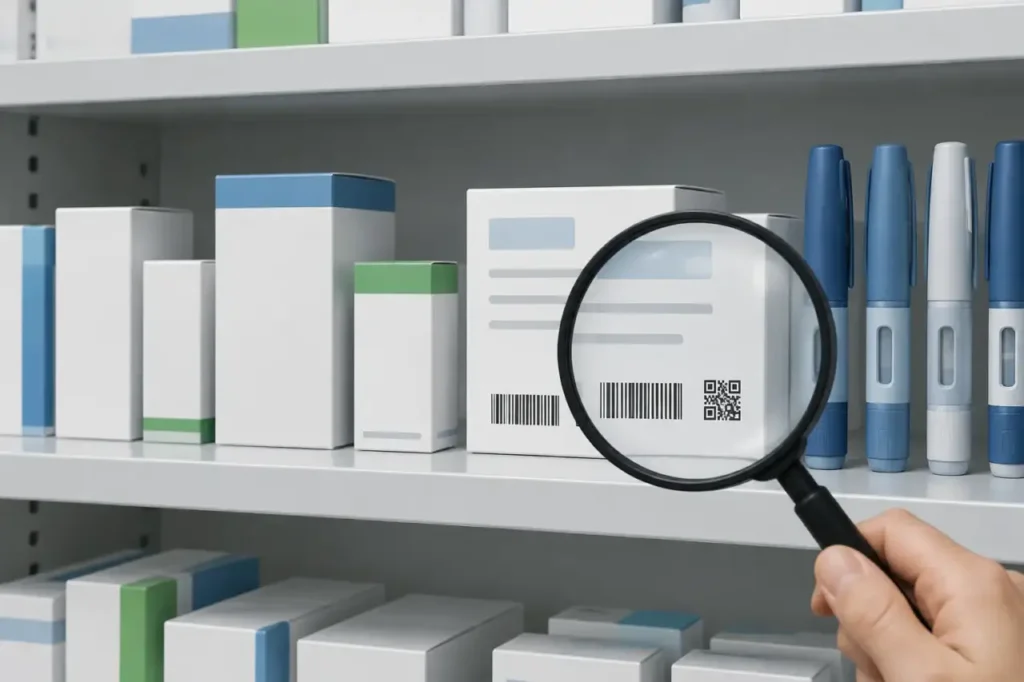
The alleged counterfeiting extended beyond the medicine’s outer packaging. The FDA said the products included counterfeit packaging, package inserts, pen labels, and needles intended to make downstream customers believe they were receiving authentic, manufacturer-authorized Ozempic.
Officials also allege that distribution continued after the FDA’s December 2023 seizure and public warning. That timing is part of the allegations described in the announcement, not a separate determination of guilt.
Who may be affected
The announcement identifies pharmacies and patients as downstream customers the alleged scheme was intended to deceive. It also notes that the FDA began issuing public safety alerts in December 2023 for consumers, pharmacies, and healthcare providers about counterfeit Ozempic products.
For those audiences, the public-health issue described by the agency is the presence of counterfeit products in the drug supply and their presentation as authentic medicines. The FDA characterized counterfeit medicines as a threat to public health and patient safety.
The charging announcement does not identify individual patients or pharmacies that received the alleged counterfeit products. It also does not provide a product-by-product list that readers could use to determine whether a particular package was involved. The notice should therefore not be read as confirmation that any individual reader’s medicine is counterfeit.
What safety steps the FDA states
The FDA says entities, including online sellers, that sell counterfeit or tampered medicines should be reported to the agency. It also says suspected counterfeit products may be reported through its “Report a problem to the FDA” resource, linked within the official announcement.
Readers seeking to report a suspected product or seller can consult that announcement for the agency’s reporting link. The notice also lists the FDA’s consumer telephone number, 888-INFO-FDA.
The release does not provide individualized medical instructions, dosing guidance, or a treatment plan. Its practical direction is to report suspected counterfeit medicines and sellers. It says the FDA takes such reports seriously and works with other federal agencies and the private sector to help protect the nation’s drug supply.
When to consult the official notice
Consult the linked FDA notice for the precise allegations, the dates covered by the investigation, the agency’s reporting resource, and its consumer contact information. It is also the place to check the agency’s wording rather than treating the allegations as established facts.
For readers looking beyond this charging announcement, the FDA maintains a separate recalls, market withdrawals, and safety alerts page. The charging release itself focuses on the investigation and alleged distribution scheme.
Frequently Asked Questions
Have the defendants been found guilty?
The announcement reports charges, not convictions. The FDA states that all defendants are presumed innocent until proven guilty beyond a reasonable doubt in court.
What counterfeit components does the announcement describe?
It describes allegedly counterfeit Ozempic with counterfeit packaging, package inserts, pen labels, and needles intended to deceive downstream customers.
How does the FDA say to report concerns?
The FDA directs readers to report suspected counterfeit products through “Report a problem to the FDA,” linked in the official notice. It also says sellers of counterfeit or tampered medicines should be reported.