

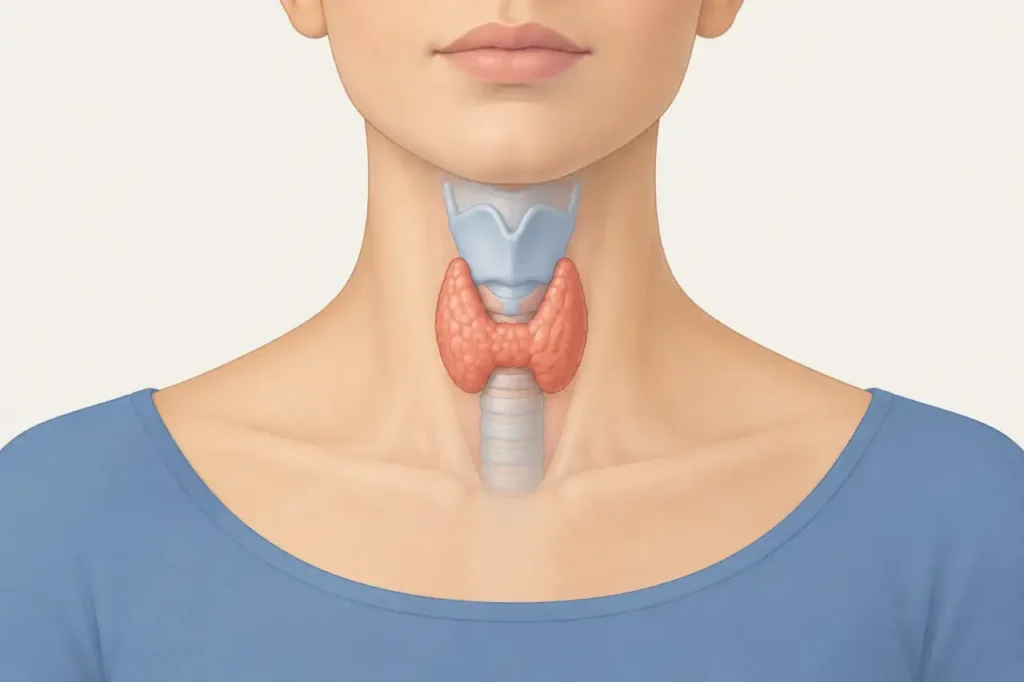
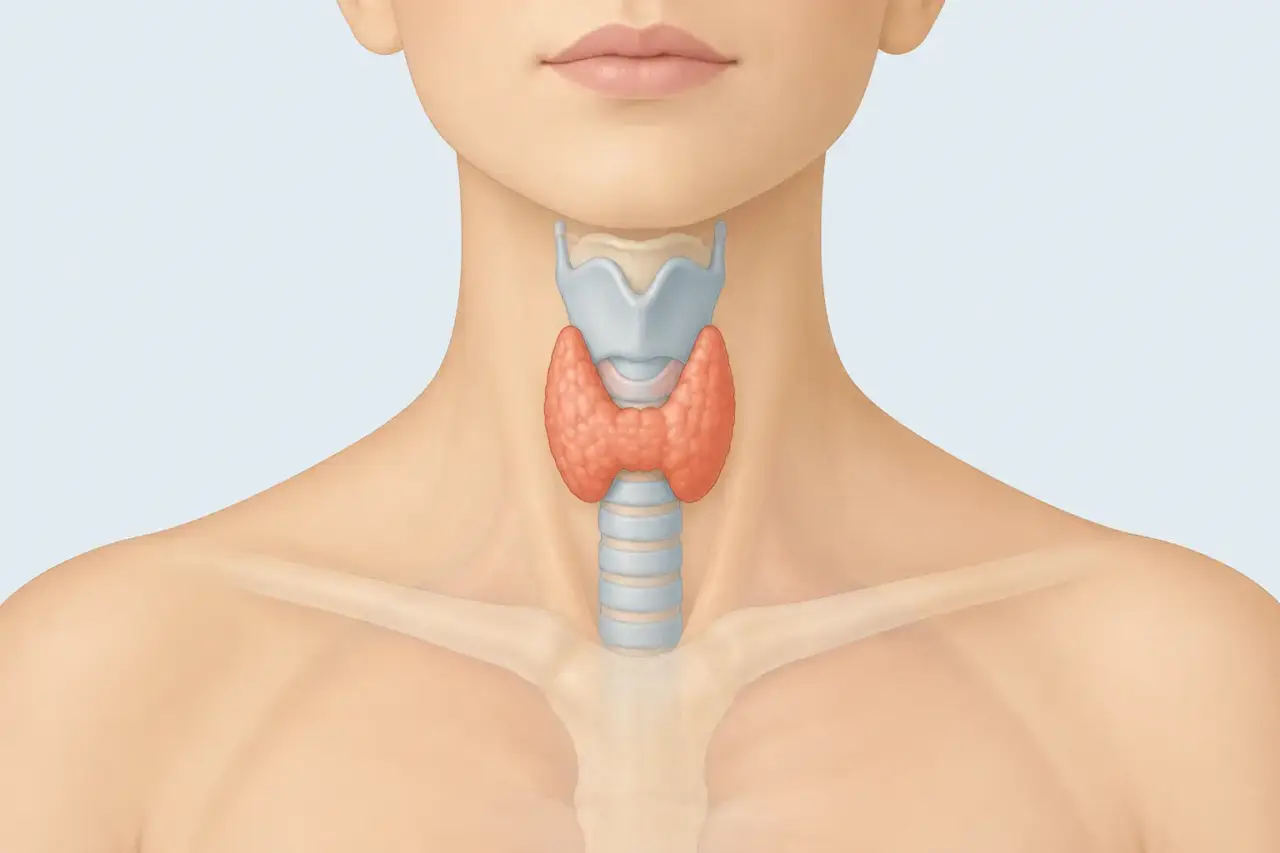
Your thyroid is a small, butterfly-shaped gland at the front of your neck. It makes hormones that control how your body uses energy. Understanding thyroid conditions starts with knowing that these hormones affect nearly every organ, including functions such as breathing, heart rate, weight, digestion, and mood.
This guide is useful for people learning about a thyroid diagnosis or preparing to discuss a concern with a health care provider. The MedlinePlus overview of thyroid diseases explains the main conditions, how they are evaluated, and the broad treatment options.
Common thyroid conditions and what the names mean
Thyroid disease is an umbrella term for several problems. Some involve the amount of hormone the gland makes. Other terms describe enlargement, lumps, swelling, or cancer. Knowing these basic distinctions can help make a medical discussion easier to follow.
Hypothyroidism and hyperthyroidism
Hypothyroidism means the thyroid does not make enough thyroid hormones. Hyperthyroidism means it makes more thyroid hormones than the body needs. Although their names sound similar, they describe opposite problems with hormone production.
Because thyroid hormones affect many important functions, evaluating thyroid health involves more than identifying the gland’s location. A health care provider considers the medical history, examination, and thyroid test results when diagnosing a condition.
Goiter, nodules, thyroiditis, and cancer
Other thyroid conditions listed by MedlinePlus include:
- Goiter: an enlargement of the thyroid gland.
- Thyroid nodules: lumps in the thyroid gland.
- Thyroiditis: swelling of the thyroid.
- Thyroid cancer: another distinct thyroid disease.
These terms describe different thyroid problems, so they should not be used interchangeably. For example, an enlarged gland and a lump in the gland are different descriptions. A diagnosis helps establish which problem is present and informs the treatment discussion.
How health care providers evaluate thyroid problems
To diagnose thyroid disease, a provider may use a medical history, a physical exam, and thyroid tests. In some cases, a biopsy may also be part of the evaluation. MedlinePlus does not describe one fixed testing pathway for every person.
The page links to information about thyroid-stimulating hormone, or TSH, tests; thyroxine, or T4, tests; triiodothyronine, or T3, tests; and thyroid antibody tests. It also provides resources about thyroid ultrasound, scans and uptake tests, and needle biopsy.
This range of resources is not a checklist of tests everyone needs. The central point is that diagnosis may involve several kinds of information, rather than the name of a symptom or a thyroid condition alone.
How treatment decisions are made
According to MedlinePlus, treatment depends on the specific thyroid problem, how severe it is, and the person’s symptoms. Possible treatments include medicines, radioiodine therapy, or thyroid surgery.
These are broad treatment categories, not a single plan for all thyroid diseases. The overview does not identify one treatment as appropriate for everyone. A provider’s evaluation is needed to connect the diagnosis and its severity with an appropriate treatment discussion.
When to seek professional medical advice
Contact a health care provider if you have questions about your health, including concerns about your thyroid or an existing diagnosis. General educational information cannot determine which condition you have or which treatment is appropriate.
MedlinePlus also offers links to thyroid information for children, women, and older adults, including resources about pregnancy and postpartum thyroiditis. Those resources may help readers find information relevant to their stage of life, but they do not replace professional care.
Frequently Asked Questions
What is the difference between hypothyroidism and hyperthyroidism?
Hypothyroidism means the thyroid makes too little hormone. Hyperthyroidism means it makes more hormone than the body needs.
Does everyone being evaluated need a thyroid biopsy?
No. MedlinePlus says a provider may perform a biopsy in some cases. Evaluation may also include a medical history, physical exam, and thyroid tests.
How are thyroid diseases treated?
Possible treatments include medicines, radioiodine therapy, or surgery. The choice depends on the thyroid problem, its severity, and symptoms.