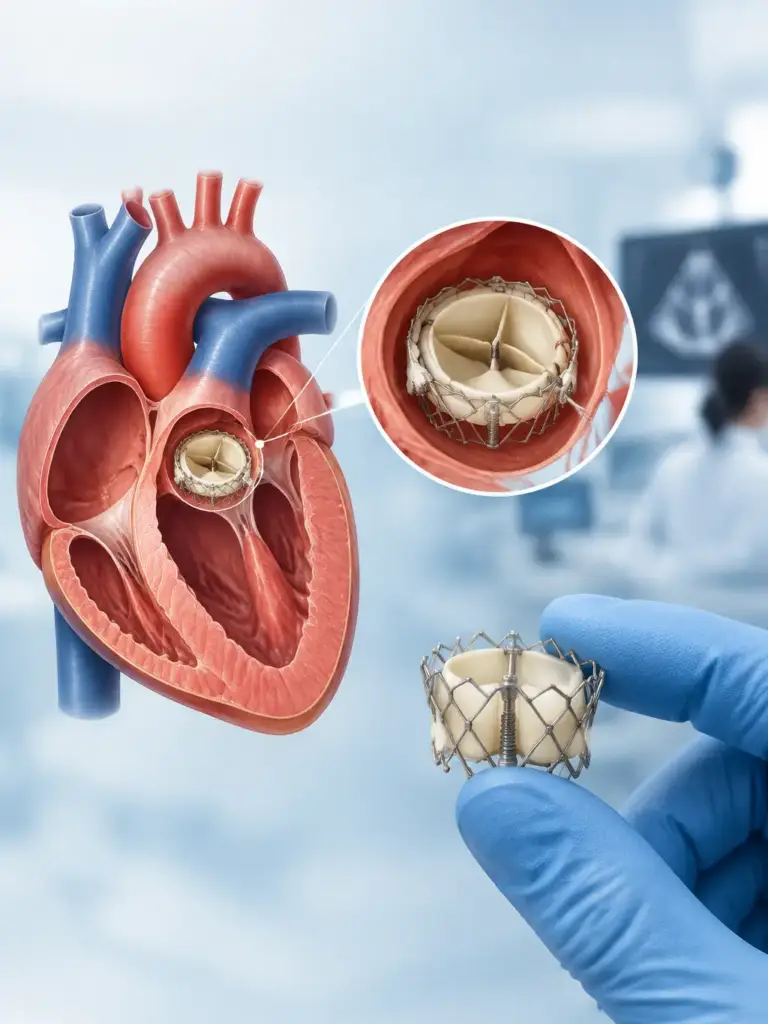
A Valve Designed to Expand
The FDA approved the first heart valve designed to expand after implantation for children with congenital pulmonary valve disease.
Expansion Requires a Procedure
The valve does not grow on its own; a balloon catheter can widen it later as a child grows.
Expandable Size Range
It starts at approximately 13 millimeters in diameter and can later expand to as much as 22 millimeters.
Who the Approval Covers
The approval covers pediatric patients with congenital pulmonary valve disease, including stenosis or atresia that restricts blood flow to the lungs.
Early Study Findings
Among the first 60 patients in a 62-patient study, blood-flow performance was acceptable at six months.
Reported Device Events
Three patients had valve-frame fractures, and two had reduced leaflet movement; those events caused no symptoms in affected patients.
Long-Term Questions Remain
The FDA says the valve may reduce repeat open-heart surgeries, but long-term benefit and durability remain under study.
Read the FDA Notice
Read the FDA’s official notice for the approved population, study results, reported device events, and evidence limitations.