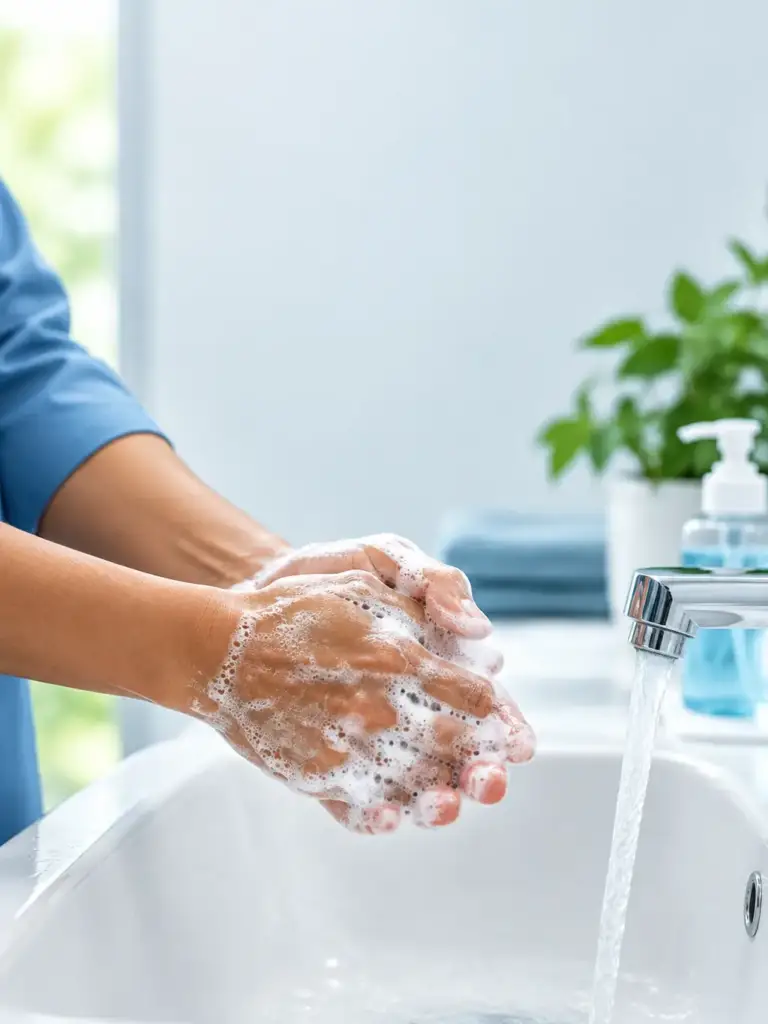
Clean Hands Help Stop Germs
Frequent handwashing helps reduce the spread of germs and prevent illness, even when your hands do not look dirty.
How Germs Travel
Touching a contaminated object and then your body can transfer germs; hands can also spread them through shared objects or handshakes.
Wash At Key Moments
Wash after using the toilet, coughing, sneezing, or blowing your nose, and before eating or preparing food.
Use Soap And Running Water
Use cool or warm running water, apply soap, and lather for at least 20 seconds to lift dirt and germs.
Cover Every Part
Rub between fingers, the backs of your hands and fingers, thumbs, nails, and cuticles before rinsing well under running water.
Finish By Drying
After rinsing, turn off the tap and dry your hands with a clean towel or let them air dry.
Sanitizer When Needed
If soap and water are unavailable, use sanitizer with at least 60% alcohol, rubbing it over your hands until dry.
Read More About Handwashing
Explore the MedlinePlus handwashing guide for more details on when to wash and how to clean your hands.