



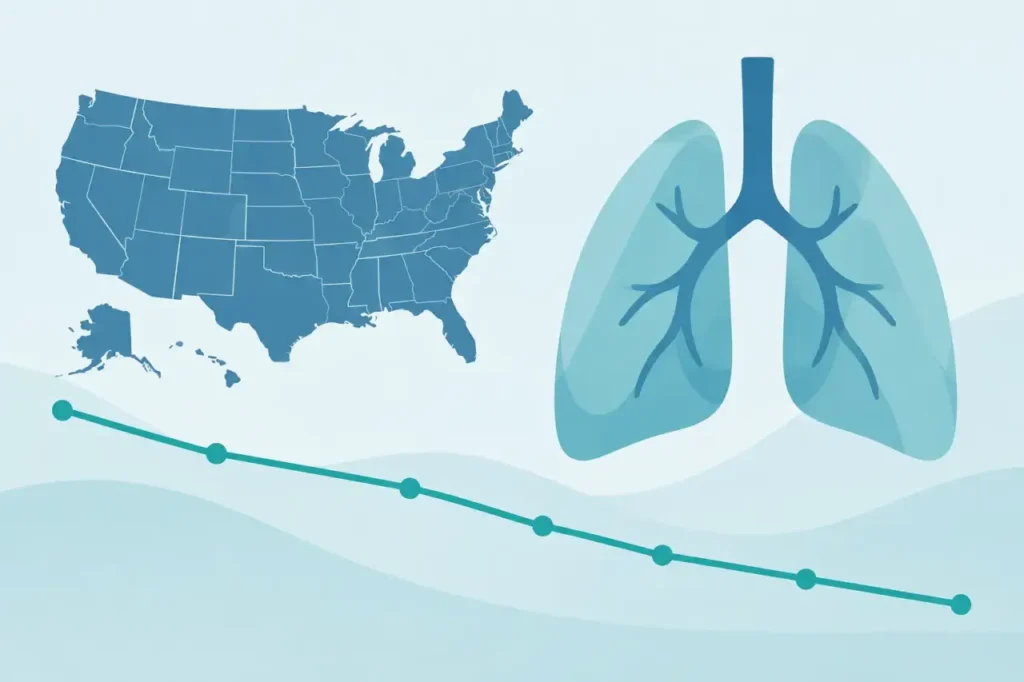
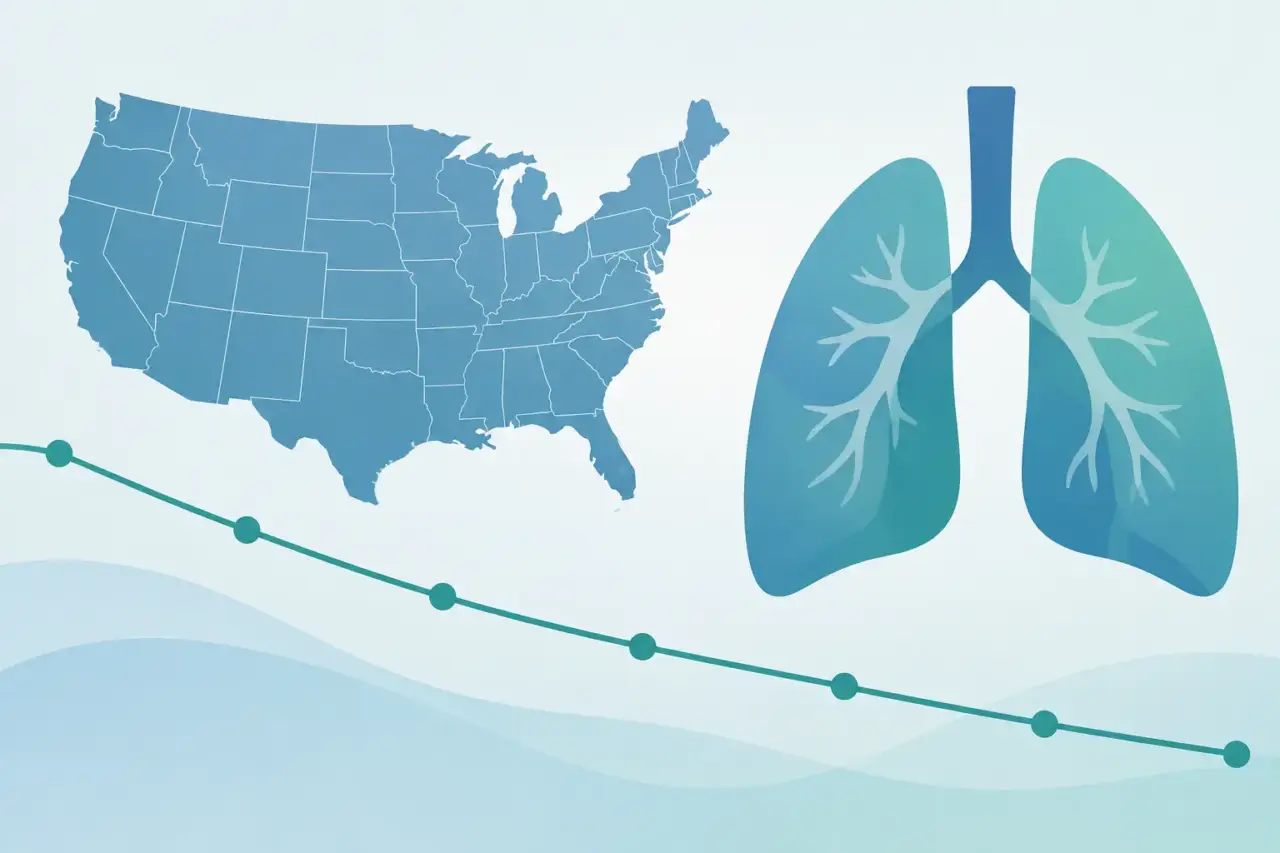
US cancer death rates fell among both men and women from 2019 to 2023, continuing a decline that has lasted more than 20 years, according to the 2026 Annual Report to the Nation on the Status of Cancer. CDC reported that accelerated progress against lung cancer accounted for much of the continued improvement.
The CDC announcement, released September 22, 2026, also describes a different trend in new diagnoses: overall rates of new cancer cases rose slightly each year from 2018 to 2022. The findings distinguish trends in cancer deaths from trends in newly diagnosed cancer.
What falling cancer death rates mean in this report
The annual report provides updates on cancer rates and trends across the United States. This edition examines new cancer cases from 2003 to 2022 and cancer deaths from 2004 to 2023. Its special topic focuses on changes in lung cancer risk factors and related outcomes during the first quarter of the 21st century.
The reported decline concerns death rates, rather than a stated reduction in the total number of deaths. The CDC announcement does not provide a numerical size for the decline. It identifies progress against lung cancer as the major driver of the continuing downward trend.
Despite that progress, lung cancer remains the second most common cancer among both men and women and the leading cause of cancer death in the United States. The report therefore presents improvement alongside a continuing public-health burden.
Who the findings concern
These are population-level findings about cancer in the United States, including trends among men and women. They are not an assessment of any individual reader’s cancer risk, diagnosis, or prognosis.
The rise in overall new cancer case rates from 2018 to 2022 was driven by increases in breast cancer among women and prostate cancer among men. Breast cancer remains the most common cancer among women, while prostate cancer remains the most common among men.
Although prostate cancer rates increased, the overall rate of new cancer cases among men remained stable. That distinction matters: a change in one cancer type does not necessarily mean the overall cancer rate for that group changed in the same direction.
What the agency says about sustaining progress
Researchers noted that further reductions in cigarette smoking and support for tobacco-free environments remain important to continued progress against lung cancer. They also said sustaining that progress may depend on access to early cancer detection, timely diagnosis, and state-of-the-art treatment.
Those are broad public-health priorities described in the announcement. The release does not provide an individual screening schedule, specific eligibility criteria, or treatment instructions. It should not be read as a personalized plan for cancer prevention or care.
When to consult the official notice
Readers should consult the linked CDC notice for the agency’s wording, the periods covered by the findings, and a link to the full report published in the journal Cancer. The full report is the place to look for more detail beyond the announcement’s summary.
The report is a collaboration among CDC; the National Cancer Institute, part of the National Institutes of Health; the American Cancer Society; and the North American Association of Central Cancer Registries. It uses cancer registry data supported by CDC and NCI and compiled by NAACCR, along with cancer death data from CDC’s National Center for Health Statistics.
Frequently Asked Questions
Did cancer death rates decline for both men and women?
Yes. The report found declining cancer death rates for both men and women from 2019 to 2023, extending a downward trend lasting more than 20 years.
Does the decline mean lung cancer is no longer a major concern?
No. Despite progress, lung cancer remains the leading cause of cancer death in the United States and the second most common cancer among both men and women.
Does the announcement include personal screening or treatment guidance?
No. It highlights tobacco reduction, tobacco-free environments, and access to detection, diagnosis, and treatment, but does not set individual screening schedules or treatment plans.