

By using this site, you agree to the Privacy Policy and Terms And Conditions. We use cookies to enhance your browsing experience, serve personalized ads or content, and analyze our traffic. By clicking "Accept All", you consent to our use of cookies.
Accept
Khaga PharmacyKhaga PharmacyKhaga Pharmacy
  • HomeHome
  • Health BlogHealth Blog
    • NeuroscienceNeuroscience
  • Health NewsHealth News
  • Web StoriesWeb Stories
  • PagesPages
    • BookmarksBookmarks
    • About UsAbout Us
Reading: Simple steps for food safety at home
Share
Notification Show More
Font ResizerAa
Khaga PharmacyKhaga Pharmacy
Font ResizerAa
  • Health BlogHealth Blog
  • NeuroscienceNeuroscience
  • Health NewsHealth News
  • BookmarksBookmarks
Search
  • HomeHome
  • Health BlogHealth Blog
  • NeuroscienceNeuroscience
  • Health NewsHealth News
  • Web StoriesWeb Stories
  • PagesPages
    • BookmarksBookmarks
    • About UsAbout Us
Follow US
  • Contact Us
  • Privacy Policy
  • Terms And Conditions
  • About Us
  • Affiliation
  • Disclaimer
  • Editorial Policy
  • Use Of Cookies
© 2024 khagapharmacy.com
Khaga Pharmacy > Health Blog > Simple steps for food safety at home
Health Blog

Simple steps for food safety at home

Safe food handling starts with shopping checks and continues through preparation, cooking, and refrigerator storage.

Rahul Priydarss
Last updated: 17 October 2026 10:53 AM
Rahul Priydarss
7 hours ago
Share
5 Min Read
SHARE
Highlights
  • Follow four basic steps: clean, separate, cook, and chill.
  • Avoid bulging cans and jars with cracks or loose lids.
  • Use the linked federal resources for food-specific cooking temperatures and storage guidance.
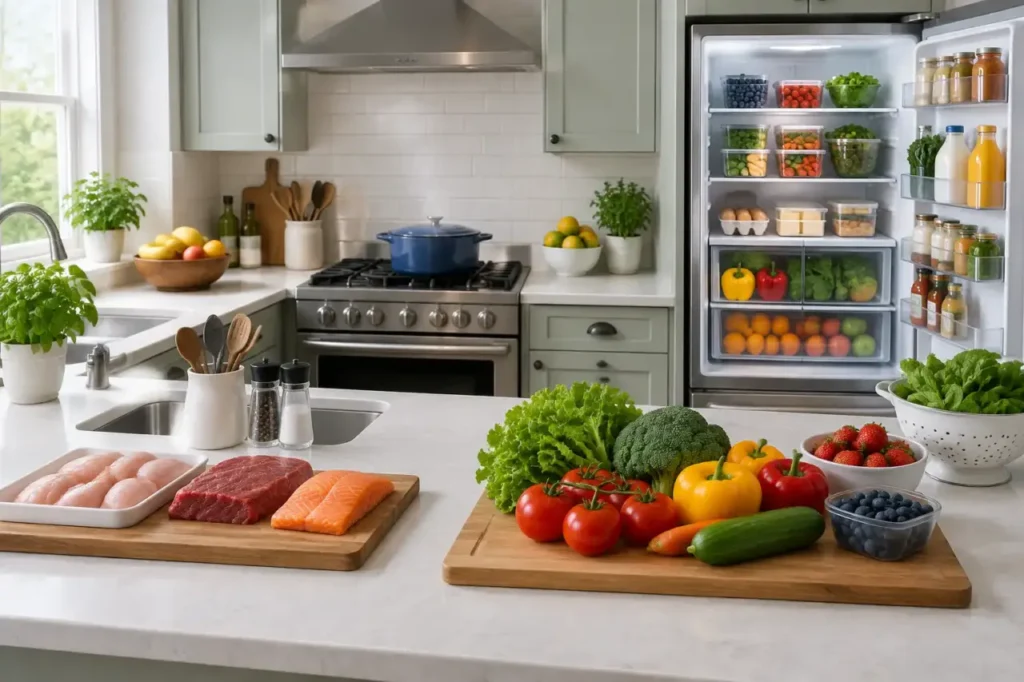
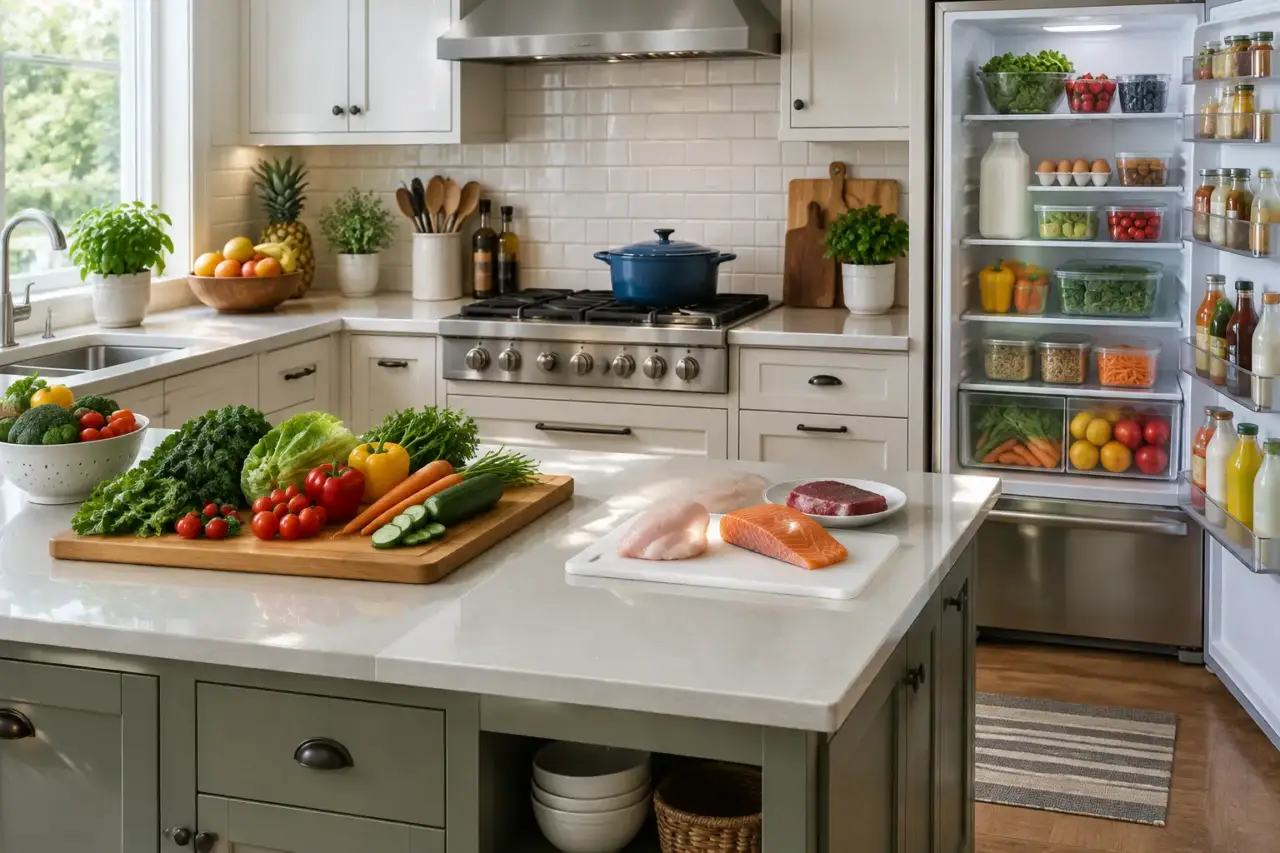
food safety at home — Home kitchen with produce, clean utensils, separate food preparation areas, and refrigerated groceries.

Practicing food safety at home means paying attention to how food is handled, cooked, and stored. These everyday steps can help prevent foodborne illness. The guidance is useful for anyone who shops for groceries, prepares meals, or puts food away after bringing it home.

Contents
Four steps for food safety at home1. Clean: Wash food, hands, and kitchen equipment2. Separate: Keep raw foods to themselves3. Cook: Food needs to get hot and stay hot4. Chill: Refrigerate fresh food right awayStart with package checks at the storeFind guidance that fits your householdFrequently Asked QuestionsWhat are the four basic food safety steps?Which packages should I avoid at the grocery store?Where can I find specific cooking and storage guidance?

The MedlinePlus food safety guide organizes the basics into four actions: clean, separate, cook, and chill. It also brings together resources on storage, cooking temperatures, specific foods, and food safety for different age groups and during pregnancy.

- Advertisement -

Four steps for food safety at home

1. Clean: Wash food, hands, and kitchen equipment

MedlinePlus advises washing fruits and vegetables, hands, counters, and cooking utensils. Cleaning is not limited to the food itself: the surfaces and tools involved in preparation are part of the same basic safety routine.

When reviewing your kitchen habits, consider each of these categories rather than focusing on only one. Washed produce does not replace the need to clean hands, counters, and utensils. All four are included in the source’s clean step.

2. Separate: Keep raw foods to themselves

Germs can spread from one food to another. That is why keeping raw foods separate is a distinct food safety step, not simply another way to describe cleaning.

As you prepare a meal, make separation one of the things you check. The practical goal is to keep raw foods to themselves rather than allowing germs to move between foods. MedlinePlus also links to federal guidance on cutting boards for readers who need more detail about those kitchen tools.

- Advertisement -

3. Cook: Food needs to get hot and stay hot

Heat kills germs, and MedlinePlus emphasizes that foods need to get hot and stay hot. Cooking is therefore another essential part of the routine, alongside cleaning and separation.

The page’s brief summary does not give a single cooking temperature for every food. Instead, it links to a USDA safe minimum internal temperature chart and information about kitchen thermometers. For a specific cooking-temperature question, use that detailed guidance rather than treating the general instruction to cook food as a complete temperature guide.

4. Chill: Refrigerate fresh food right away

Put fresh food in the refrigerator right away, according to MedlinePlus. Refrigeration belongs in the same routine as preparation and cooking, rather than being an afterthought once the other steps are complete.

For more detailed storage questions, the page links to a federal cold food storage chart and resources about refrigeration and freezing. Those resources address questions beyond the short summary, such as guidance for storing particular foods.

- Advertisement -

Start with package checks at the store

Food safety also involves what you select while shopping. MedlinePlus advises avoiding cans that are bulging and jars that have cracks or loose lids. Check packages to make sure the food has not reached its expiration date.

These shopping checks complement the four home steps. Choosing a package is one part of the process; handling, cooking, and storage still matter after the groceries arrive in your kitchen.

Find guidance that fits your household

The MedlinePlus page includes resources for children under five, pregnant people, and adults age 65 or older. Readers preparing food for these groups can use the dedicated materials for information more closely matched to their household.

It also links to guidance on grilling, seafood, eggs, ground beef, raw flour and dough, and food safety during emergencies. The four basic steps are a starting point, not a substitute for every food-specific question. If you have questions about your health, contact a health care provider; online food safety information does not replace professional medical care or advice.

Frequently Asked Questions

What are the four basic food safety steps?

Clean, separate, cook, and chill: wash the listed foods and kitchen items, keep raw foods separate, heat food properly, and refrigerate fresh food right away.

- Advertisement -

Which packages should I avoid at the grocery store?

Avoid bulging cans and jars with cracks or loose lids. MedlinePlus also advises checking packages to ensure food has not reached its expiration date.

Where can I find specific cooking and storage guidance?

The MedlinePlus page links to a safe minimum internal temperature chart, a cold food storage chart, and federal resources on refrigeration, freezing, and specific foods.

You Might Also Like

Lips Burning Cosmetic Surgery: What You Need to Know

How Much Sugar is in a Can of Coke?: Decoding Coke’s Sweetness

Rhinoplasty Before and After Male: Transform Your Look and Confidence

Breast Surgery Augmented: Know Before Considering It

Rhinoplasty Healing Stages: Tips for a Smooth Recovery

TAGGED:Food safetyFood storageFoodborne illness preventionKitchen hygiene
SOURCES:MedlinePlus
Share This Article
Whatsapp Whatsapp LinkedIn Email Print
ByRahul Priydarss
Follow:
I am professional blog writer with more than 2+ year experience and write 300+ article on many website also publish my thesis on hydrogel.
Previous Article proper handwashing — Hands lathered with soap over a household sink. A guide to proper handwashing and infection prevention
Next Article preventing dehydration — A glass of water and reusable bottle on a table beside a sun hat. A practical guide to preventing dehydration in daily life
Leave a Comment Leave a Comment

Leave a Reply Cancel reply

Your email address will not be published. Required fields are marked *

Find Us on Socials

- Advertisement -

Latest News

preventing dehydration — A glass of water and reusable bottle on a table beside a sun hat.
A practical guide to preventing dehydration in daily life
Health Blog
35 minutes ago
proper handwashing — Hands lathered with soap over a household sink.
A guide to proper handwashing and infection prevention
Health Blog
1 day ago
sun protection — Sunscreen, a long-sleeved shirt, and wraparound sunglasses arranged on an outdoor bench.
Everyday sun protection: A practical guide to UV safety
Health Blog
1 day ago
Anktiva for bladder cancer — Illustration of a simplified bladder model in a clinical setting.
FDA Expands Approval of Anktiva for Bladder Cancer That Has Not Responded to BCG
Health News
2 days ago
//

We influence 20 million users and is the number one business and technology news network on the planet

Khaga PharmacyKhaga Pharmacy
Follow US
© 2026 khagapharmacy.com
  • Contact Us
  • Privacy Policy
  • Terms And Conditions
  • About Us
  • Affiliation
  • Disclaimer
  • Editorial Policy
  • Use Of Cookies
Welcome Back!

Sign in to your account

Username or Email Address
Password

Lost your password?