By using this site, you agree to the Privacy Policy and Terms And Conditions. We use cookies to enhance your browsing experience, serve personalized ads or content, and analyze our traffic. By clicking "Accept All", you consent to our use of cookies.
Accept
Khaga PharmacyKhaga PharmacyKhaga Pharmacy
  • HomeHome
  • Health BlogHealth Blog
    • NeuroscienceNeuroscience
  • Health NewsHealth News
  • Web StoriesWeb Stories
  • PagesPages
    • BookmarksBookmarks
    • About UsAbout Us
Reading: Bone health and osteoporosis prevention: A practical guide
Share
Notification Show More
Font ResizerAa
Khaga PharmacyKhaga Pharmacy
Font ResizerAa
  • Health BlogHealth Blog
  • NeuroscienceNeuroscience
  • Health NewsHealth News
  • BookmarksBookmarks
Search
  • HomeHome
  • Health BlogHealth Blog
  • NeuroscienceNeuroscience
  • Health NewsHealth News
  • Web StoriesWeb Stories
  • PagesPages
    • BookmarksBookmarks
    • About UsAbout Us
Follow US
  • Contact Us
  • Privacy Policy
  • Terms And Conditions
  • About Us
  • Affiliation
  • Disclaimer
  • Editorial Policy
  • Use Of Cookies
© 2024 khagapharmacy.com
Khaga Pharmacy > Health Blog > Bone health and osteoporosis prevention: A practical guide
Health Blog

Bone health and osteoporosis prevention: A practical guide

Healthy habits and appropriate screening can support bone strength and help address a disease that often has no symptoms.

Rahul Priydarss
Last updated: 29 October 2026 5:03 AM
Rahul Priydarss
3 hours ago
Share
5 Min Read
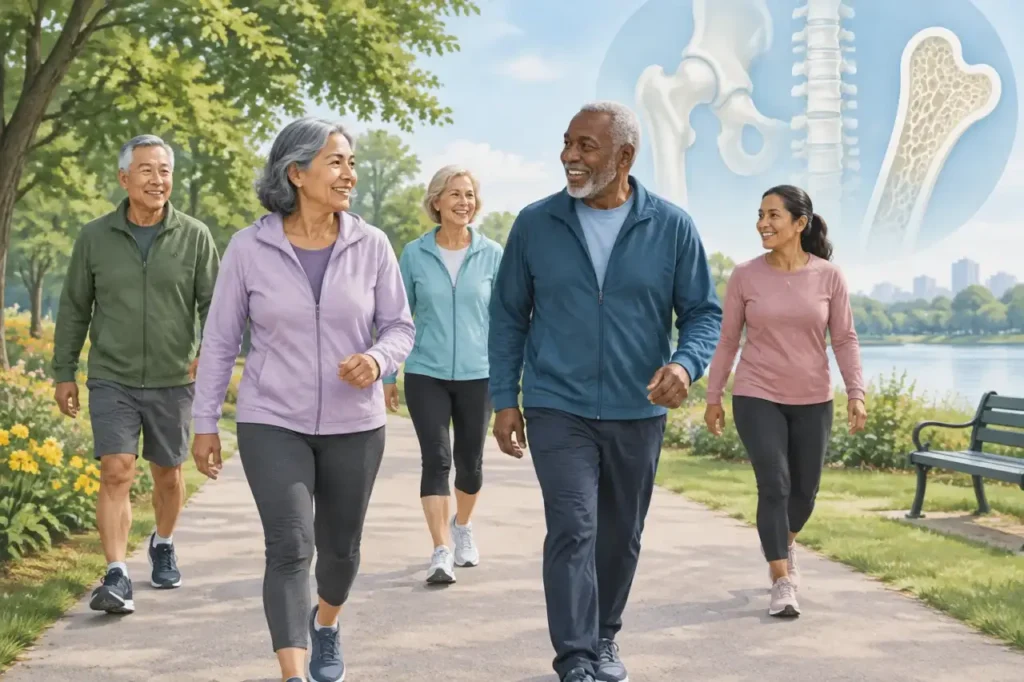
osteoporosis prevention — Illustration of middle-aged and older adults walking outdoors to support bone health.
SHARE
Highlights
  • Osteoporosis often causes no symptoms until a bone breaks.
  • A healthy diet, regular activity, not smoking, and limiting alcohol can help protect bones.
  • Screening is recommended for women 65 and older and younger postmenopausal women at increased risk.

Osteoporosis prevention centers on habits that help keep bones strong, along with understanding personal risk and screening recommendations. Osteoporosis weakens bones and makes them more likely to break. Because it usually causes no symptoms, a person may not know they have it until a fracture occurs.

Contents
What happens to bones in osteoporosis?Practical steps for osteoporosis preventionWho is more likely to develop osteoporosis?Screening and when to seek professional guidanceFrequently Asked QuestionsCan osteoporosis develop without symptoms?Can men get osteoporosis?Can healthy habits help prevent osteoporosis?

This information is useful for anyone interested in bone health, especially older adults, postmenopausal women, and people with risk factors. According to MedlinePlus guidance on osteoporosis, nutrition, physical activity, and other lifestyle habits can help protect bones.
- Advertisement -
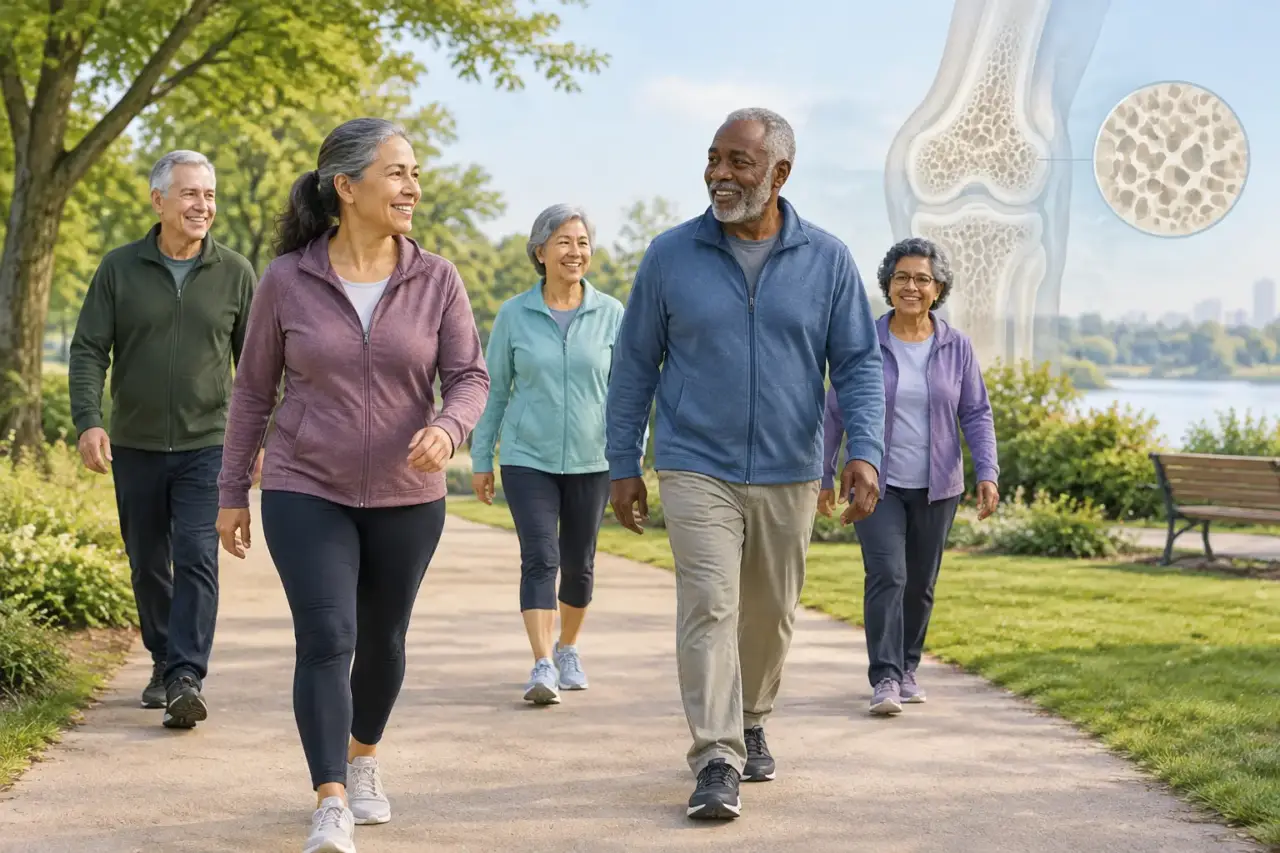
osteoporosis prevention — Illustration of middle-aged and older adults walking outdoors to support bone health.

What happens to bones in osteoporosis?

Bone is living tissue. The body continually breaks down old bone and replaces it with new bone. Osteoporosis develops when more bone is broken down than replaced, reducing bone mass and changing bone structure. Decreases in bone mineral density and changes in bone strength can make fractures more likely.

Any bone can break, but osteoporosis-related fractures most commonly affect the hip, vertebrae in the spine, and wrist. The lack of early symptoms is why osteoporosis is often called a “silent” disease.

Practical steps for osteoporosis prevention

MedlinePlus identifies several habits that can help keep bones strong and help prevent osteoporosis:

  • Eat a healthy diet rich in calcium and vitamin D. A diet lacking these nutrients can increase osteoporosis risk. Not getting enough protein is another dietary risk factor.
  • Get regular physical activity. Physical inactivity and prolonged bedrest can contribute to bone loss.
  • Do not smoke. Smoking tobacco is a lifestyle factor that contributes to bone loss.
  • Limit alcohol. Long-term heavy alcohol use can also contribute to bone loss.

For people who already have osteoporosis, a provider may recommend weight-bearing activity such as walking, strength training, and balance exercises. Fall prevention is also part of reducing fracture risk.

- Advertisement -

Who is more likely to develop osteoporosis?

Anyone can develop osteoporosis, but risk rises with age. It is most common in people over 50 and is more common in women, especially after menopause. People who are slim and thin-boned also have a higher risk.

Other risk factors include having a parent with osteoporosis or a broken hip, low levels of certain hormones, and some medical conditions. These include endocrine diseases, certain digestive diseases, rheumatoid arthritis, certain cancers, HIV, and anorexia nervosa.

Long-term use of certain medicines can also raise risk. Examples include corticosteroids, proton pump inhibitors used to treat gastroesophageal reflux disease, and medicines for epilepsy. These factors are reasons to discuss bone health with a health care provider.

Screening and when to seek professional guidance

MedlinePlus reports that the U.S. Preventive Services Task Force recommends osteoporosis screening for women age 65 and older and for postmenopausal women under 65 who have factors that increase their risk. For men, whether routine screening is helpful remains uncertain; more research is needed.

- Advertisement -

An evaluation may include medical and fracture history, a physical exam, and a bone density scan. A provider may also use a short fracture-risk questionnaire to estimate the chance of breaking a bone over the next 10 years.

If you have osteoporosis, professional guidance is important for treatment and activity choices. Treatment aims to slow or stop bone loss and prevent fractures. Options may include nutrition and lifestyle changes, fall prevention, and medicines that slow bone loss or help rebuild bone. MedlinePlus also advises avoiding potentially fracture-causing movements, including twisting the spine and bending forward from the waist.

Frequently Asked Questions

Can osteoporosis develop without symptoms?

Yes. It usually causes no symptoms, and a broken bone may be the first sign that someone has the disease.

Can men get osteoporosis?

Yes. Anyone can develop osteoporosis. However, evidence is not yet clear on whether routine screening benefits men.

Can healthy habits help prevent osteoporosis?

Yes. A healthy diet rich in calcium and vitamin D, regular physical activity, limiting alcohol, and not smoking can help keep bones strong and help prevent osteoporosis.

- Advertisement -

You Might Also Like

Hot Flashes During Pregnancy: Understanding the Causes, Symptoms, and Solutions

Health Advantages: 3 Antioxidant-Rich Cucumbers With 3 Anti-Inflammatory Properties

PG Tips Tea: The Taste of Nature Since 1930

Hard Mountain Dew: Taste, Health, and Availability

Ebola Virus Unmasked: Symptoms, Diagnosis, and Recent 2023 Outbreaks

TAGGED:bone healthHealthy agingOsteoporosisPreventive health
SOURCES:MedlinePlus
Share This Article
Whatsapp Whatsapp LinkedIn Email Print
ByRahul Priydarss
Follow:
I am professional blog writer with more than 2+ year experience and write 300+ article on many website also publish my thesis on hydrogel.
Previous Article common anxiety symptoms — Illustration of an adult sitting at a kitchen table with hands together. Recognizing common anxiety symptoms and when to seek help
Next Article fall prevention for older adults — Illustration of an older adult in a home with clear walkways and support rails. A practical guide to fall prevention for older adults
Leave a Comment Leave a Comment

Leave a Reply Cancel reply

Your email address will not be published. Required fields are marked *

Find Us on Socials

- Advertisement -

Latest News

asthma triggers — Illustration of a home with a pet and trees outside, representing possible asthma trigger exposures.
Understanding asthma triggers and everyday prevention
Health Blog
1 hour ago
fall prevention for older adults — Illustration of an older adult in a home with clear walkways and support rails.
A practical guide to fall prevention for older adults
Health Blog
2 hours ago
common anxiety symptoms — Illustration of an adult sitting at a kitchen table with hands together.
Recognizing common anxiety symptoms and when to seek help
Health Blog
14 hours ago
FDA neuroscience program — Illustration of a brain connected to abstract molecular structures and digital research patterns.
FDA neuroscience program launches with Alzheimer’s prevention focus
Neuroscience
5 days ago
//

We influence 20 million users and is the number one business and technology news network on the planet

Khaga PharmacyKhaga Pharmacy
Follow US
© 2026 khagapharmacy.com
  • Contact Us
  • Privacy Policy
  • Terms And Conditions
  • About Us
  • Affiliation
  • Disclaimer
  • Editorial Policy
  • Use Of Cookies
Welcome Back!

Sign in to your account

Username or Email Address
Password

Lost your password?