


Falls can happen at any age, but fall prevention for older adults deserves particular attention. Older adults are more likely to fall and to break a bone when they do, especially if they have osteoporosis. A broken hip can lead to disability and a loss of independence.
The MedlinePlus guide to falls describes several ways to lower risk, including regular exercise, eye exams, and a safer home. This information can help older adults, family members, and caregivers understand what may contribute to falls and what concerns to discuss with a health care provider.
What can increase the risk of falling?
A fall may involve health problems, changes in physical abilities, or a loss of footing. MedlinePlus identifies several common causes:
- Balance problems and muscle weakness: Weakness, especially in the legs, can make it harder to get up from a chair or stay balanced on an uneven surface.
- Some medicines: Certain medicines can make a person feel dizzy, confused, or slow.
- Vision problems: Problems with eyesight are another possible contributor.
- Alcohol: Alcohol can affect balance and reflexes.
- Certain illnesses: Low blood pressure, diabetes, and neuropathy are among the conditions associated with falls.
- Slow reflexes: Slower responses can make it harder to keep your balance or move out of the way of a hazard.
- Slipping or tripping: Losing footing or traction can cause a fall.
Understanding these contributors helps explain why prevention involves both personal health and the surrounding environment. Removing a tripping hazard addresses a different concern than improving muscle strength or getting an eye exam.
Steps for fall prevention for older adults
Use regular exercise to support strength and balance
Regular exercise may lower the risk of falls by strengthening muscles, improving balance, and keeping bones strong. These benefits are relevant to the muscle weakness and balance difficulties that can contribute to falls.
The MedlinePlus summary does not prescribe a particular exercise routine, frequency, or intensity. It provides a general reason to make physical activity part of fall prevention rather than a one-size-fits-all exercise plan.
Keep up with eye exams and health care
Taking care of your health, including getting regular eye exams, is another prevention step described by MedlinePlus. Because vision problems can contribute to falls, eye care belongs alongside strength, balance, and home safety in a prevention approach.
Medicines and health conditions may also play a role. Questions about dizziness, balance, vision, or medicine effects are reasons to contact a health care provider for advice about your health.
Look for ways to make the home safer
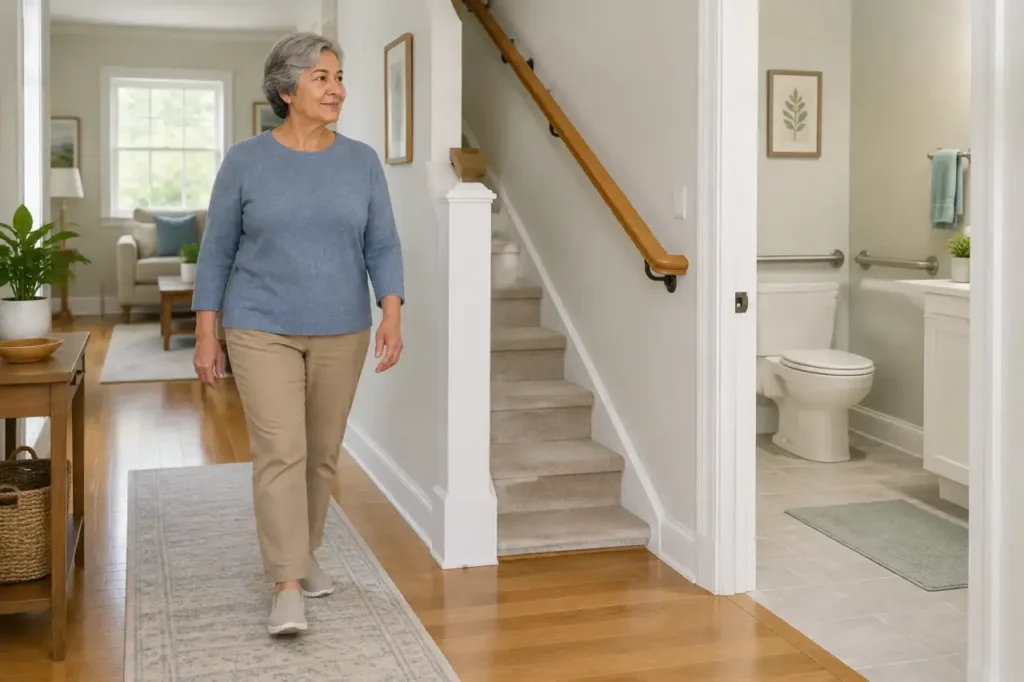
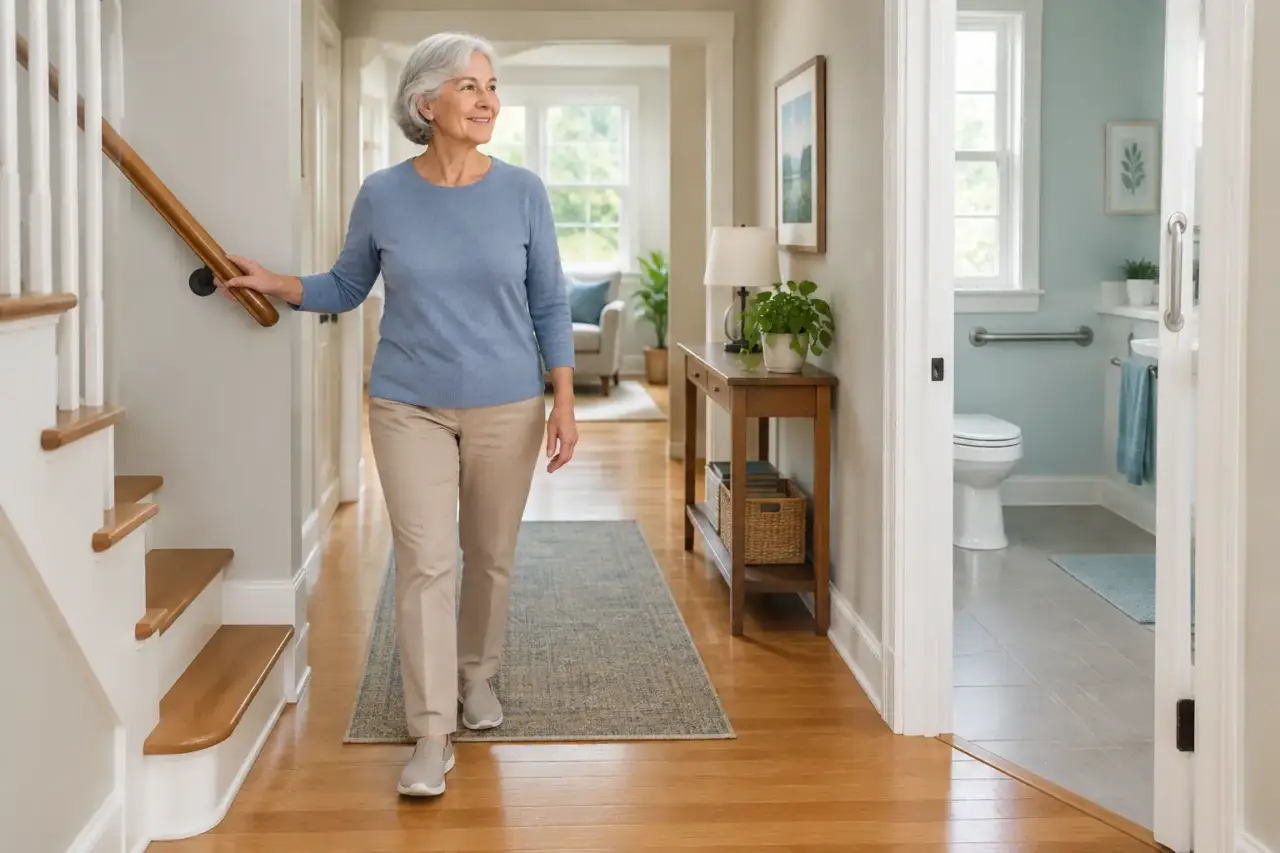
MedlinePlus recommends getting rid of tripping hazards and making sure there are rails on stairs and in the bath. These changes address the surroundings where a person moves through daily activities.
A practical starting point is to look for things someone could trip over and check whether stairs and bathing areas have rails. Home safety is one part of prevention; it does not replace attention to balance, vision, muscle strength, or other health concerns.
Bone health matters if a fall happens
Preventing a fall and reducing the chance of a fracture are related but distinct goals. Older adults with osteoporosis are especially likely to break a bone when they fall.
To reduce the chance of breaking a bone in a fall, MedlinePlus advises getting enough calcium and vitamin D. The summary does not give amounts or recommend a particular supplement. A health care provider can address questions about individual health needs.
Frequently Asked Questions
Why are falls especially concerning for older adults?
Older adults have a higher risk of falling and of breaking a bone in a fall. A hip fracture may lead to disability and loss of independence.
Can exercise help prevent falls?
Yes. MedlinePlus says regular exercise may lower fall risk by strengthening muscles, improving balance, and keeping bones strong.
When should I ask a health care provider for advice?
Contact a provider with questions about your health, including concerns about balance, dizziness, vision, or medicine effects. General fall-prevention information is not a substitute for professional medical care or advice.