




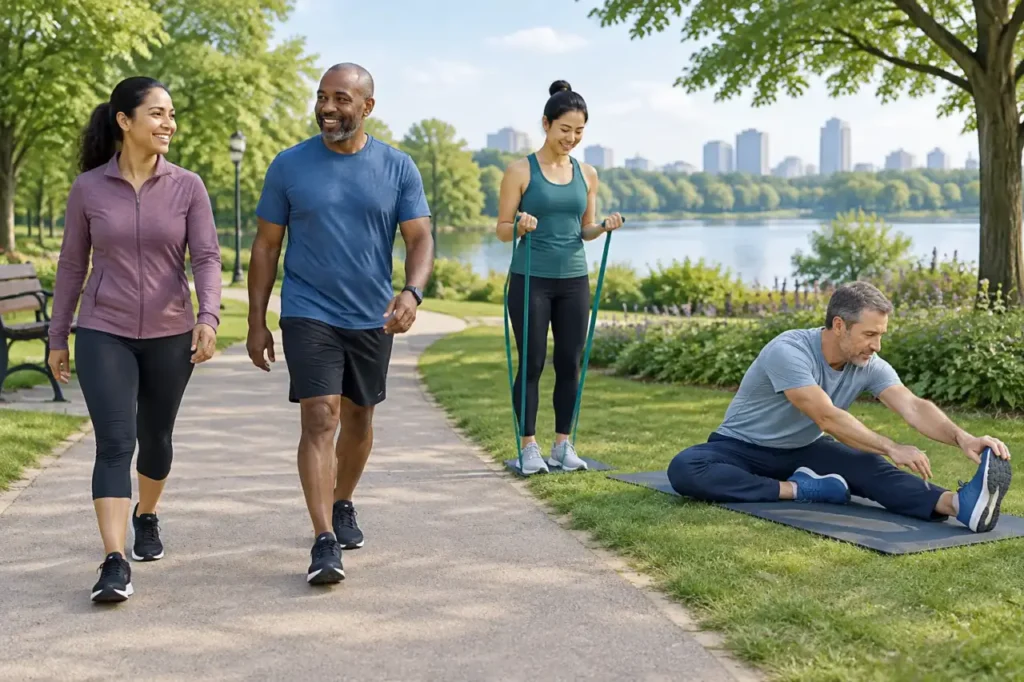
Understanding physical activity basics can help you build an exercise routine that fits your life. Exercise is anything that gets your body moving. Regular activity can improve overall health and fitness and reduce the risk of many chronic, or long-term, diseases.
This guide is useful for people getting started, returning after a break, or looking for ways to stay consistent. The MedlinePlus guide to exercise and physical fitness emphasizes gradual progress, variety, and regular practice rather than pushing too hard at once.
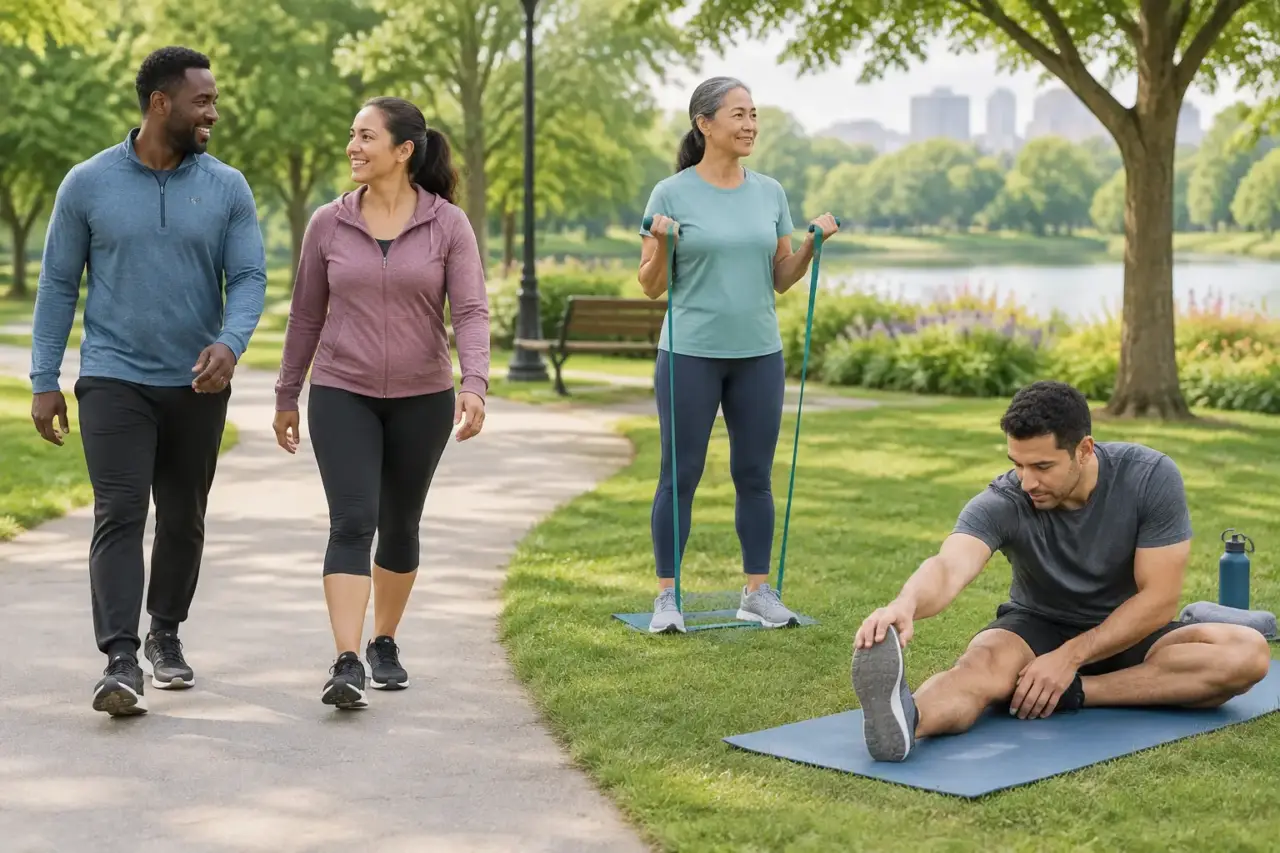
Physical activity basics: build a habit gradually
Your body adapts to the activities you do most often, so regular practice helps you improve. Start slowly and build your activity level over time. Even short sessions can help you keep making progress.
As your fitness improves, a small increase can add a challenge: a few more minutes of walking, a quicker pace, or slightly heavier weights. The goal is to continue getting stronger, faster, or more flexible without doing too much all at once. Mixing activities can also keep exercise interesting and help prevent injuries or burnout.
Include different types of exercise
Most people benefit from a combination of these four types of activity. A health care provider can help you choose the type and amount that fit your health and fitness level.
Aerobic activity
Walking, running, and swimming are examples of aerobic exercise, also called cardio. These activities increase breathing and heart rate, support the health of your heart, lungs, and circulatory system, and improve overall fitness.
Strength training
Strength, or resistance, exercises use weights, resistance bands, or your own body weight to build stronger muscles. Include activities that strengthen all parts of your body, especially the core muscles in your abdomen, back, and hips. A strong core supports balance and stability and can lower the risk of back injuries.
Balance and flexibility
Balance exercises, such as tai chi or standing on one leg, improve stability and coordination. They may help with walking on uneven surfaces and preventing falls. Flexibility activities, including stretching or yoga, help joints move more easily and improve posture.
Find room for movement in your day
You do not need fancy equipment to get started. If a long exercise session is difficult to fit into your schedule, break your activity into smaller chunks. Small amounts can still be helpful, and you can work toward the recommended amount. How much exercise you need depends on your age and health.
- At home: Resistance bands, dumbbells, or a mat offer options for strength training and stretching. A stationary bike or workout video can provide indoor cardio.
- At a gym: Ask whether you can try the facility before joining and whether staff can show you how to use the equipment.
- Outdoors: Walk your dog, ride a bike, or explore parks and trails. Dress for the weather and protect yourself from the sun. If safety is a concern, choose a well-lit neighborhood, busy park, or indoor shopping mall for walking.
Stay motivated without overdoing it
Choose activities you enjoy and set goals that are challenging but realistic. A friend, group challenge, or online community can provide accountability. A pedometer or fitness-tracking app can help you follow your progress.
When your routine feels stale, try a different class, playlist, or outdoor route. Use proper equipment, listen to your body, and avoid overdoing it.
Know when to get medical guidance
MedlinePlus advises checking with your health care provider before starting, especially if you have difficulty moving or balancing, or worry that exercise may not be safe. If you have not exercised in a while, start slowly and discuss any health concerns with your provider.
If you do not feel right, or have any pain, extreme shortness of breath, or dizziness, stop exercising and seek help right away.
Frequently Asked Questions
Do short exercise sessions count?
Yes. Even small amounts of exercise can be helpful. Breaking activity into shorter sessions can make it easier to fit into your day.
Do I need a gym membership?
No. You can exercise at home or outdoors, and getting started does not require fancy equipment.
How much exercise should I do?
The amount depends on your age and health. Your health care provider can help you choose an appropriate amount and type of activity.