




Everyday sun protection is about more than avoiding a painful sunburn. Ultraviolet (UV) rays are invisible radiation that can pass through the skin and damage skin cells. According to MedlinePlus guidance on sun exposure, that damage can occur during any season and at any temperature.
This information is useful for anyone planning time outdoors, whether for work, recreation, or everyday activities. The basic approach includes limiting exposure when the sun is strongest, using sunscreen, covering skin, protecting the eyes, and avoiding tanning devices.
Why UV exposure matters
A sunburn is a sign of skin damage, not simply a temporary change in skin color. A suntan is not a healthy alternative: MedlinePlus explains that a tan appears after the sun’s rays have already killed some skin cells and damaged others.
The effects of UV exposure extend beyond sunburn and tanning. UV rays can also cause eye problems, wrinkles, skin spots, and skin cancer. Because skin damage can happen at any temperature, cool weather is not a reason to set sun safety aside.
Everyday sun protection habits
Limit exposure when the sun is strongest
MedlinePlus recommends staying out of the sun when it is strongest, between 10 a.m. and 2 p.m. Keep that time window in mind when planning outdoor activities. The recommendation belongs alongside the page’s other protective measures, rather than replacing sunscreen, clothing, or eye protection.
Use sunscreen and protective clothing
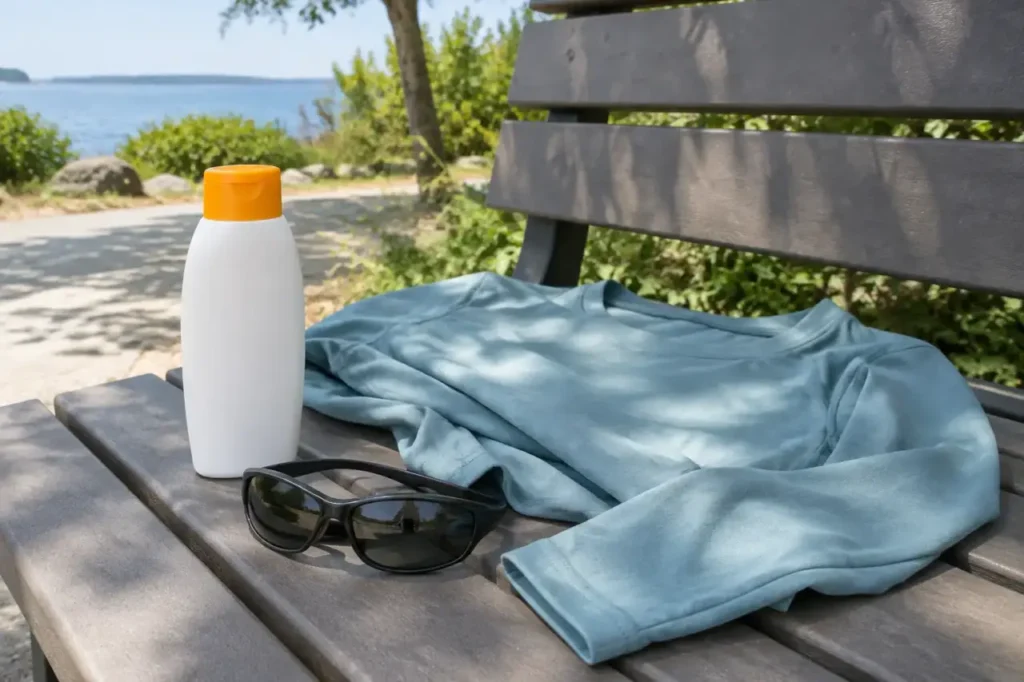
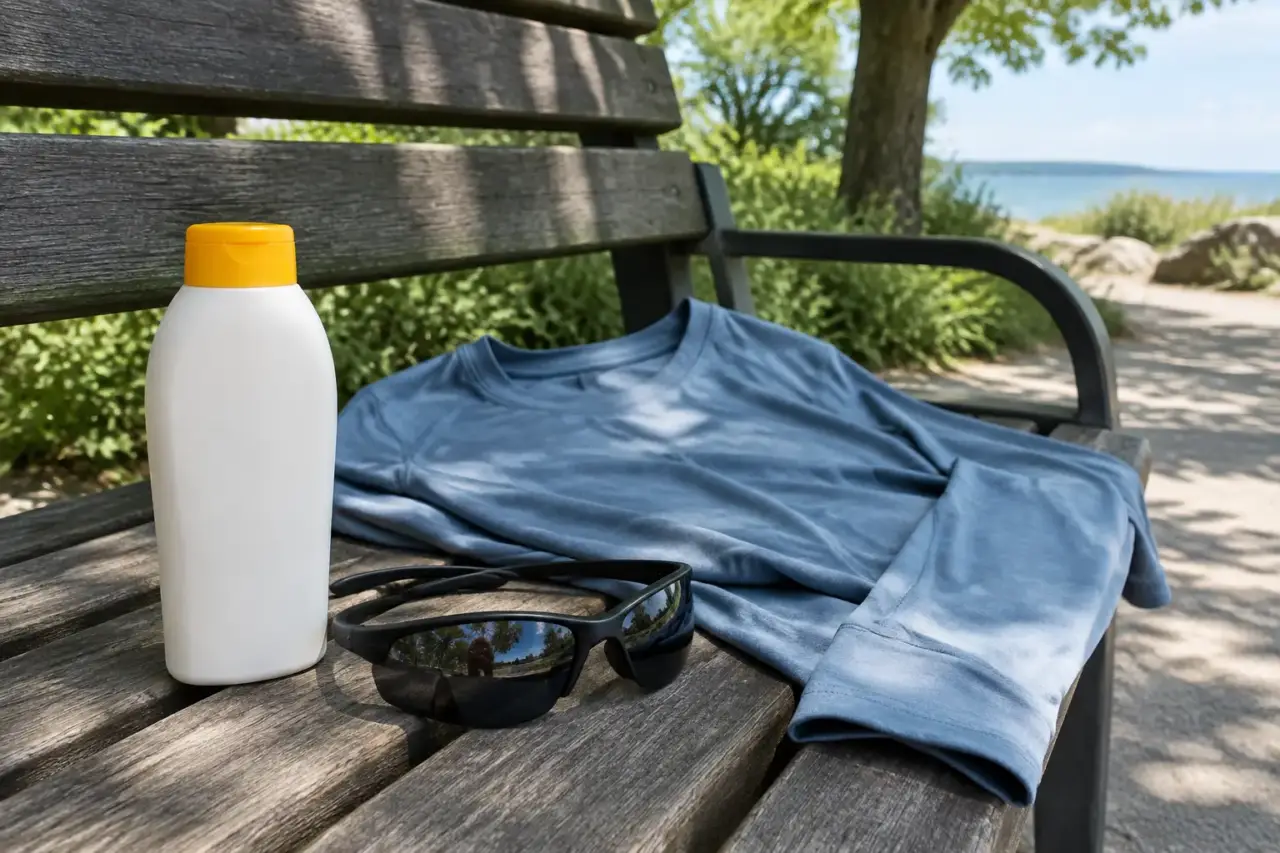
Use sunscreen with a sun protection factor, or SPF, of 15 or higher, as recommended in the MedlinePlus summary. Wear protective clothing as well. These are separate parts of the page’s guidance: sunscreen is not presented as the only step needed to protect yourself.
The MedlinePlus page also links to more detailed information about sunscreen labels and sun-protective clothing. Its summary provides a basic starting point, rather than detailed instructions for every sunscreen product or situation.
Protect your eyes
Choose wraparound sunglasses that provide 100% UV ray protection. MedlinePlus specifically includes both the wraparound style and the level of UV protection in its recommendation. Eye protection matters because UV rays can cause eye problems as well as damage the skin.
Avoid tanning devices
Avoid sunlamps and tanning beds. MedlinePlus includes this advice in its prevention guidance and makes clear that a suntan is not healthy. Getting a tan should not be treated as a sign that skin has benefited from UV exposure.
Watch for skin changes and seek medical advice
Check your skin regularly for changes in the size, shape, color, or feel of birthmarks, moles, and spots. MedlinePlus identifies these changes as signs of skin cancer. If you notice a change, contact a health care provider for evaluation rather than trying to diagnose it yourself.
Professional advice is also appropriate when you have questions about your health or need help applying general sun-safety information to your circumstances. This guide provides education, not an individual diagnosis or treatment plan. MedlinePlus likewise states that its information is not a substitute for professional medical care or advice.
Frequently Asked Questions
Do I need sun protection when it is cold?
Yes. MedlinePlus states that UV rays can damage skin during any season and at any temperature. Sun protection is not only a warm-weather concern.
Is a suntan healthier than a sunburn?
No. Both reflect skin damage. A tan appears after the sun’s rays have already killed some skin cells and damaged others.
What skin changes should I discuss with a health care provider?
Discuss changes in the size, shape, color, or feel of birthmarks, moles, or spots. These changes warrant professional attention because MedlinePlus identifies them as signs of skin cancer.


