

By using this site, you agree to the Privacy Policy and Terms And Conditions. We use cookies to enhance your browsing experience, serve personalized ads or content, and analyze our traffic. By clicking "Accept All", you consent to our use of cookies.
Accept
Khaga PharmacyKhaga PharmacyKhaga Pharmacy
  • HomeHome
  • Health BlogHealth Blog
    • NeuroscienceNeuroscience
  • Health NewsHealth News
  • Web StoriesWeb Stories
  • PagesPages
    • BookmarksBookmarks
    • About UsAbout Us
Reading: Everyday sun protection: A practical guide to UV safety
Share
Notification Show More
Font ResizerAa
Khaga PharmacyKhaga Pharmacy
Font ResizerAa
  • Health BlogHealth Blog
  • NeuroscienceNeuroscience
  • Health NewsHealth News
  • BookmarksBookmarks
Search
  • HomeHome
  • Health BlogHealth Blog
  • NeuroscienceNeuroscience
  • Health NewsHealth News
  • Web StoriesWeb Stories
  • PagesPages
    • BookmarksBookmarks
    • About UsAbout Us
Follow US
  • Contact Us
  • Privacy Policy
  • Terms And Conditions
  • About Us
  • Affiliation
  • Disclaimer
  • Editorial Policy
  • Use Of Cookies
© 2024 khagapharmacy.com
Khaga Pharmacy > Health Blog > Everyday sun protection: A practical guide to UV safety
Health Blog

Everyday sun protection: A practical guide to UV safety

UV exposure can damage skin in any season, making protective habits important beyond hot summer days.

Rahul Priydarss
Last updated: 16 October 2026 8:11 AM
Rahul Priydarss
10 hours ago
Share
5 Min Read
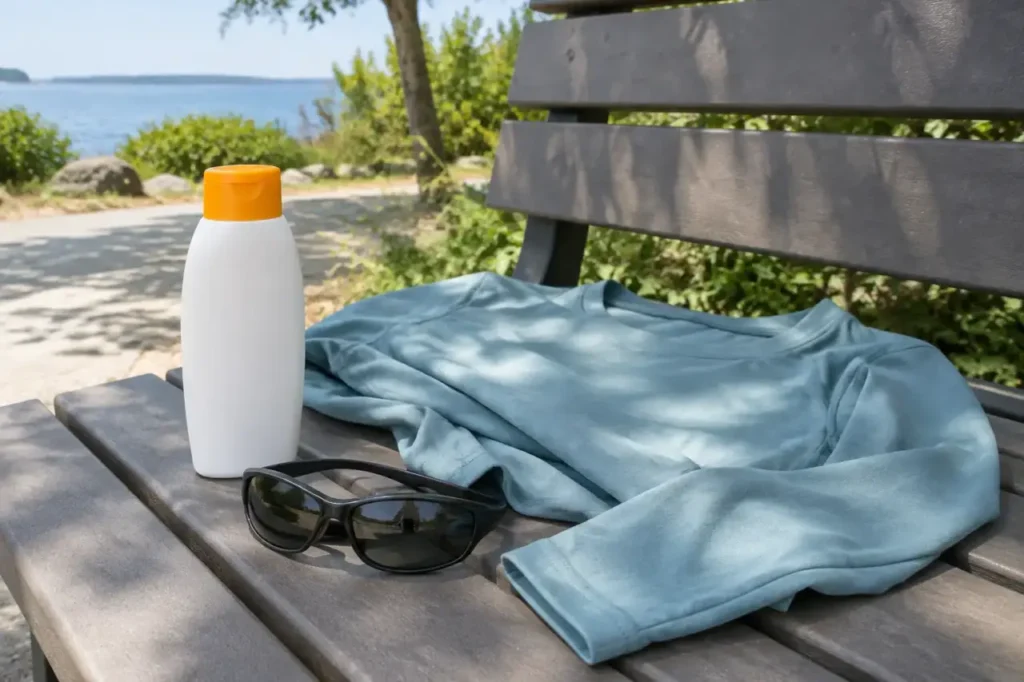
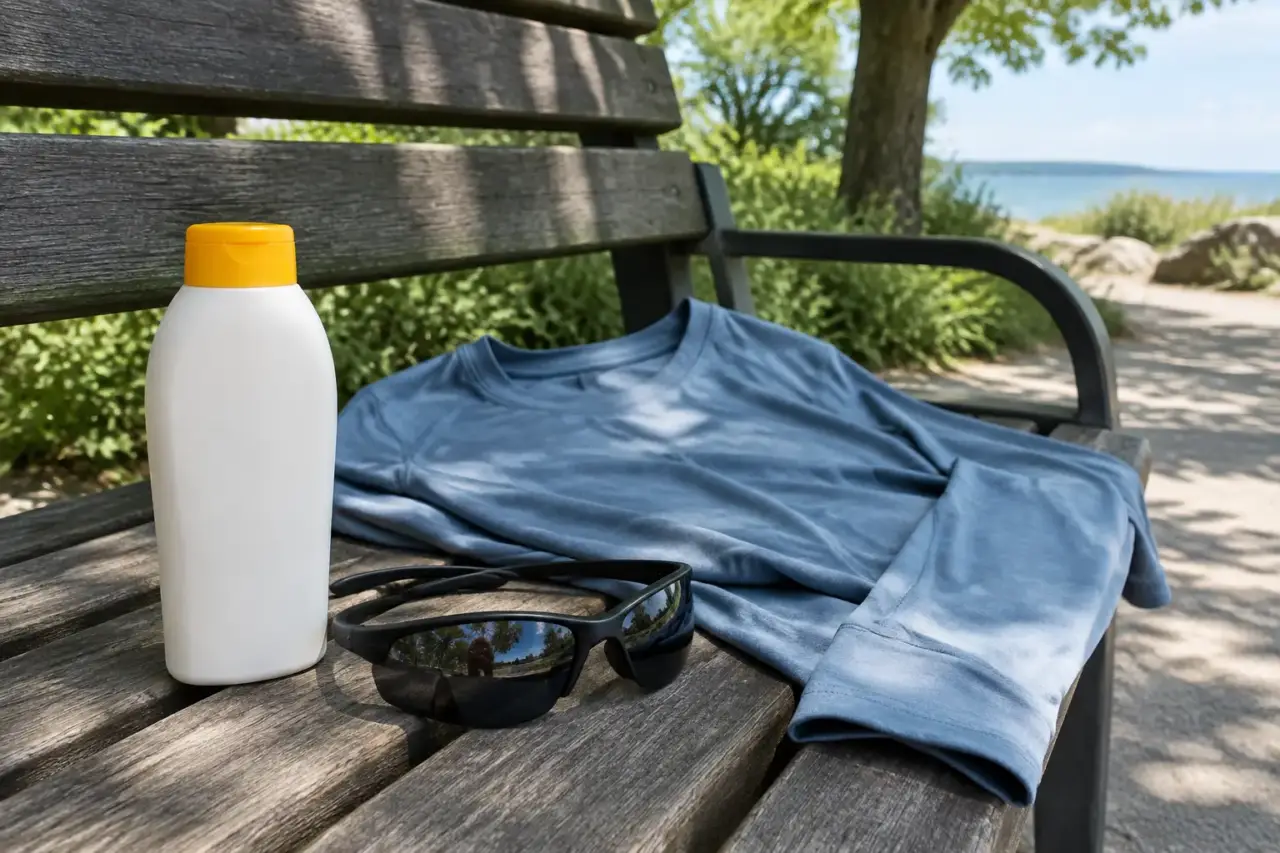
sun protection — Sunscreen, a long-sleeved shirt, and wraparound sunglasses arranged on an outdoor bench.
SHARE
Highlights
  • UV rays can damage skin during any season and at any temperature.
  • MedlinePlus recommends sunscreen with SPF 15 or higher, protective clothing, and sunglasses with 100% UV protection.
  • Check birthmarks, moles, and spots regularly for changes in size, shape, color, or feel.

Everyday sun protection is about more than avoiding a painful sunburn. Ultraviolet (UV) rays are invisible radiation that can pass through the skin and damage skin cells. According to MedlinePlus guidance on sun exposure, that damage can occur during any season and at any temperature.

Contents
Why UV exposure mattersEveryday sun protection habitsLimit exposure when the sun is strongestUse sunscreen and protective clothingProtect your eyesAvoid tanning devicesWatch for skin changes and seek medical adviceFrequently Asked QuestionsDo I need sun protection when it is cold?Is a suntan healthier than a sunburn?What skin changes should I discuss with a health care provider?

This information is useful for anyone planning time outdoors, whether for work, recreation, or everyday activities. The basic approach includes limiting exposure when the sun is strongest, using sunscreen, covering skin, protecting the eyes, and avoiding tanning devices.
- Advertisement -
sun protection — Sunscreen, a long-sleeved shirt, and wraparound sunglasses arranged on an outdoor bench.

Why UV exposure matters

A sunburn is a sign of skin damage, not simply a temporary change in skin color. A suntan is not a healthy alternative: MedlinePlus explains that a tan appears after the sun’s rays have already killed some skin cells and damaged others.

The effects of UV exposure extend beyond sunburn and tanning. UV rays can also cause eye problems, wrinkles, skin spots, and skin cancer. Because skin damage can happen at any temperature, cool weather is not a reason to set sun safety aside.

Everyday sun protection habits

Limit exposure when the sun is strongest

MedlinePlus recommends staying out of the sun when it is strongest, between 10 a.m. and 2 p.m. Keep that time window in mind when planning outdoor activities. The recommendation belongs alongside the page’s other protective measures, rather than replacing sunscreen, clothing, or eye protection.

Use sunscreen and protective clothing

Use sunscreen with a sun protection factor, or SPF, of 15 or higher, as recommended in the MedlinePlus summary. Wear protective clothing as well. These are separate parts of the page’s guidance: sunscreen is not presented as the only step needed to protect yourself.

- Advertisement -

The MedlinePlus page also links to more detailed information about sunscreen labels and sun-protective clothing. Its summary provides a basic starting point, rather than detailed instructions for every sunscreen product or situation.

Protect your eyes

Choose wraparound sunglasses that provide 100% UV ray protection. MedlinePlus specifically includes both the wraparound style and the level of UV protection in its recommendation. Eye protection matters because UV rays can cause eye problems as well as damage the skin.

Avoid tanning devices

Avoid sunlamps and tanning beds. MedlinePlus includes this advice in its prevention guidance and makes clear that a suntan is not healthy. Getting a tan should not be treated as a sign that skin has benefited from UV exposure.

Watch for skin changes and seek medical advice

Check your skin regularly for changes in the size, shape, color, or feel of birthmarks, moles, and spots. MedlinePlus identifies these changes as signs of skin cancer. If you notice a change, contact a health care provider for evaluation rather than trying to diagnose it yourself.

- Advertisement -

Professional advice is also appropriate when you have questions about your health or need help applying general sun-safety information to your circumstances. This guide provides education, not an individual diagnosis or treatment plan. MedlinePlus likewise states that its information is not a substitute for professional medical care or advice.

Frequently Asked Questions

Do I need sun protection when it is cold?

Yes. MedlinePlus states that UV rays can damage skin during any season and at any temperature. Sun protection is not only a warm-weather concern.

Is a suntan healthier than a sunburn?

No. Both reflect skin damage. A tan appears after the sun’s rays have already killed some skin cells and damaged others.

What skin changes should I discuss with a health care provider?

Discuss changes in the size, shape, color, or feel of birthmarks, moles, or spots. These changes warrant professional attention because MedlinePlus identifies them as signs of skin cancer.

You Might Also Like

Why Megan Thee Stallion Nose Job Rumors Are Just Speculation?

Sleep Apnea Appliances In 2024 Transforming Your Sleep With Top 4 Products

Famous Conjoined Twins Abby and Brittany Hensel Age

What is Perimenopause? The Transition Phase in a Woman’s Life

Managing Vaginal Yeast Infections: Causes, Symptoms, and Prevention Strategies

TAGGED:Eye protectionSkin healthSun safetySunscreenUV exposure
SOURCES:MedlinePlus
Share This Article
Whatsapp Whatsapp LinkedIn Email Print
ByRahul Priydarss
Follow:
I am professional blog writer with more than 2+ year experience and write 300+ article on many website also publish my thesis on hydrogel.
Previous Article Anktiva for bladder cancer — Illustration of a simplified bladder model in a clinical setting. FDA Expands Approval of Anktiva for Bladder Cancer That Has Not Responded to BCG
Next Article proper handwashing — Hands lathered with soap over a household sink. A guide to proper handwashing and infection prevention
Leave a Comment Leave a Comment

Leave a Reply Cancel reply

Your email address will not be published. Required fields are marked *

Find Us on Socials

- Advertisement -

Latest News

proper handwashing — Hands lathered with soap over a household sink.
A guide to proper handwashing and infection prevention
Health Blog
1 hour ago
Anktiva for bladder cancer — Illustration of a simplified bladder model in a clinical setting.
FDA Expands Approval of Anktiva for Bladder Cancer That Has Not Responded to BCG
Health News
1 day ago
adult sleep needs — Quiet bedroom with dark curtains, soft lighting, and a book beside the bed.
Understanding adult sleep needs: Hours and healthy habits
Health Blog
1 day ago
healthy eating — Vegetables, fruit, whole grains, beans, fish, yogurt, and water arranged on a kitchen table.
Healthy eating: A practical guide to balanced nutrition
Health Blog
3 days ago
//

We influence 20 million users and is the number one business and technology news network on the planet

Khaga PharmacyKhaga Pharmacy
Follow US
© 2026 khagapharmacy.com
  • Contact Us
  • Privacy Policy
  • Terms And Conditions
  • About Us
  • Affiliation
  • Disclaimer
  • Editorial Policy
  • Use Of Cookies
Welcome Back!

Sign in to your account

Username or Email Address
Password

Lost your password?