

By using this site, you agree to the Privacy Policy and Terms And Conditions. We use cookies to enhance your browsing experience, serve personalized ads or content, and analyze our traffic. By clicking "Accept All", you consent to our use of cookies.
Accept
Khaga PharmacyKhaga PharmacyKhaga Pharmacy
  • HomeHome
  • Health BlogHealth Blog
    • NeuroscienceNeuroscience
  • Health NewsHealth News
  • Web StoriesWeb Stories
  • PagesPages
    • BookmarksBookmarks
    • About UsAbout Us
Reading: Understanding dietary fiber and digestion
Share
Notification Show More
Font ResizerAa
Khaga PharmacyKhaga Pharmacy
Font ResizerAa
  • Health BlogHealth Blog
  • NeuroscienceNeuroscience
  • Health NewsHealth News
  • BookmarksBookmarks
Search
  • HomeHome
  • Health BlogHealth Blog
  • NeuroscienceNeuroscience
  • Health NewsHealth News
  • Web StoriesWeb Stories
  • PagesPages
    • BookmarksBookmarks
    • About UsAbout Us
Follow US
  • Contact Us
  • Privacy Policy
  • Terms And Conditions
  • About Us
  • Affiliation
  • Disclaimer
  • Editorial Policy
  • Use Of Cookies
© 2024 khagapharmacy.com
Khaga Pharmacy > Health Blog > Understanding dietary fiber and digestion
Health Blog

Understanding dietary fiber and digestion

Plant foods provide fiber that supports digestion, while adding it gradually can help limit gas, bloating, and cramps.

Rahul Priydarss
Last updated: 18 October 2026 8:54 AM
Rahul Priydarss
10 hours ago
Share
4 Min Read
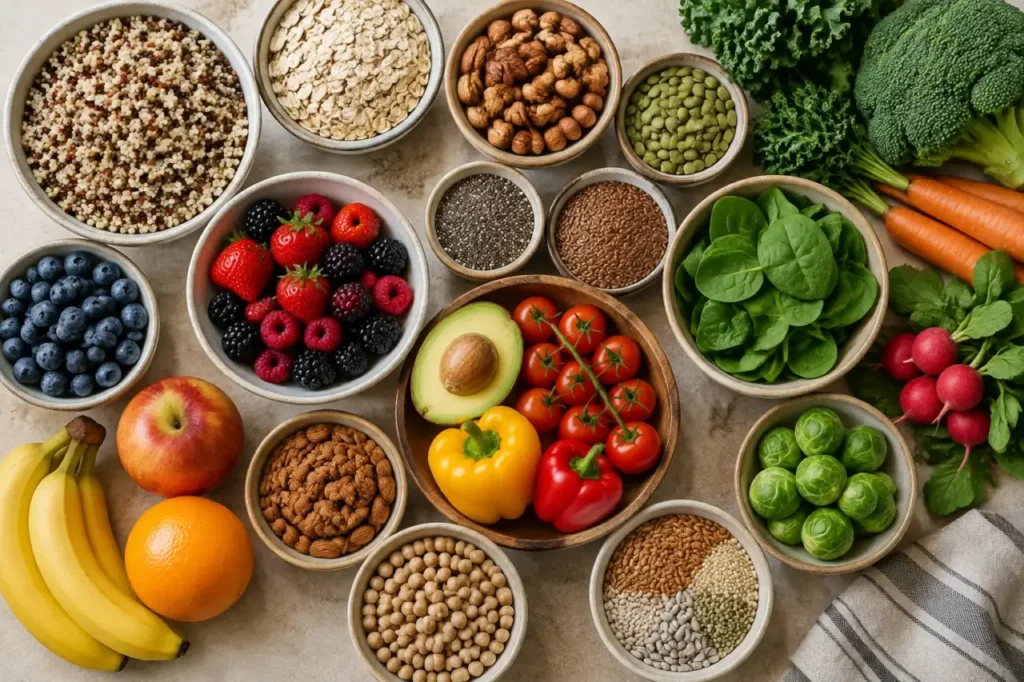
dietary fiber and digestion — Whole grains, nuts, seeds, fruits, and vegetables arranged on a table.
SHARE
Highlights
  • Dietary fiber helps digestion and helps prevent constipation.
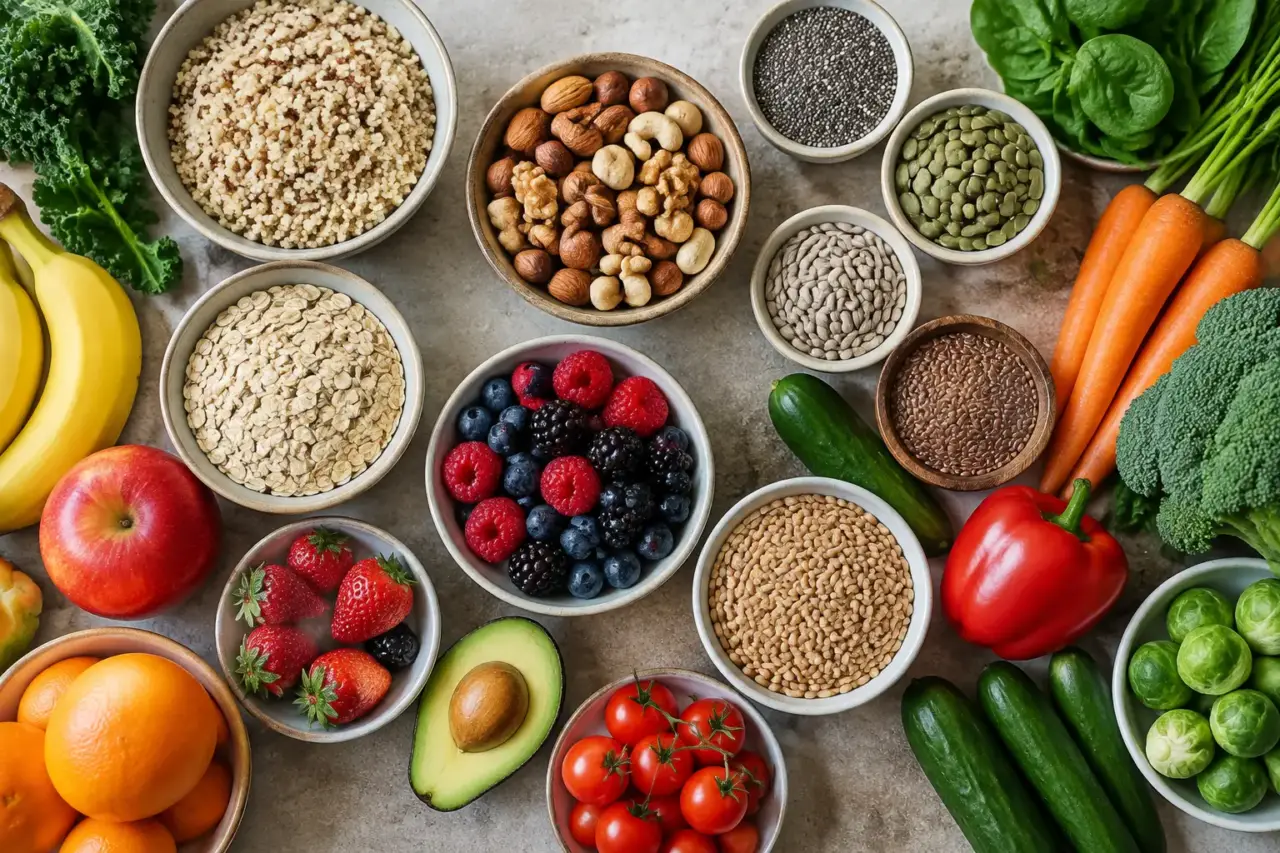
  • Whole grains, nuts, seeds, fruits, and vegetables are good fiber sources.
  • Increase fiber slowly; adding too much too quickly can cause gas, bloating, and cramps.

Understanding dietary fiber and digestion starts with a simple fact: fiber is a substance in plants, and dietary fiber is the kind you eat. It is a type of carbohydrate that helps digestion and helps prevent constipation. It also adds bulk to your diet and helps you feel full faster.

Contents
How dietary fiber and digestion are connectedSoluble and insoluble fiber on food labelsWhich foods provide dietary fiber?Why increasing fiber slowly mattersWhen to ask a health care providerFrequently Asked QuestionsIs dietary fiber a carbohydrate?Can fiber help prevent constipation?Why can adding fiber cause bloating?

This information is useful for people who want to understand fiber on food labels, recognize foods that provide it, or learn why increasing fiber gradually matters. According to MedlinePlus guidance on dietary fiber, most Americans do not eat enough of it.
- Advertisement -
dietary fiber and digestion — Whole grains, nuts, seeds, fruits, and vegetables arranged on a table.

How dietary fiber and digestion are connected

Fiber supports digestion and helps prevent constipation. These are central reasons to pay attention to it as part of your diet. You may also hear fiber called bulk or roughage; both are other names used for dietary fiber.

Its benefits are not limited to digestion. By adding bulk to the diet and making you feel full faster, fiber can help with weight control. That is a potential benefit, not a promise of weight loss or a substitute for individualized guidance about weight-related health concerns.

Soluble and insoluble fiber on food labels

A food label may list soluble fiber or insoluble fiber. These are two types of dietary fiber, and both have important health benefits. Recognizing those terms can help you understand that they refer to fiber rather than unrelated ingredients.

The MedlinePlus summary does not set separate intake goals for the two types. Its main practical message is broader: recognize good food sources of fiber and add fiber to your diet slowly.

- Advertisement -

Which foods provide dietary fiber?

MedlinePlus identifies several groups of foods as good sources of dietary fiber:

  • Whole grains
  • Nuts and seeds
  • Fruits and vegetables

These categories offer a useful starting point for reviewing where fiber appears in your usual meals. They also show that fiber is available from several kinds of plant foods, rather than just one food or product.

Food labels are another place you may encounter information about fiber, including the terms soluble and insoluble. The general overview does not give a daily gram target or a required serving schedule, so it should not be read as a personalized eating plan.

Why increasing fiber slowly matters

The clearest caution in the MedlinePlus summary is about how quickly you make changes. Increasing dietary fiber too quickly can lead to gas, bloating, and cramps. Its advice is to add fiber slowly rather than making a sudden increase.

- Advertisement -

This matters even though fiber has health benefits. The goal of including more fiber does not remove the possibility of discomfort when the change happens too quickly. Keep the gradual-increase guidance in mind when considering changes to the fiber-containing foods you eat.

When to ask a health care provider

General nutrition information cannot determine what is appropriate for your individual health needs. If you have questions about constipation, digestive discomfort, or changing your diet, contact a health care provider. MedlinePlus specifically notes that its information is not a substitute for professional medical care or advice.

Frequently Asked Questions

Is dietary fiber a carbohydrate?

Yes. Dietary fiber is a type of carbohydrate found in plants. Food labels may identify it as soluble fiber or insoluble fiber.

Can fiber help prevent constipation?

Yes. MedlinePlus states that dietary fiber helps digestion and helps prevent constipation. Contact a health care provider if you have questions about your digestive health.

Why can adding fiber cause bloating?

Increasing fiber too quickly can cause gas, bloating, and cramps. MedlinePlus advises adding dietary fiber slowly.

- Advertisement -

You Might Also Like

Step into Comfort: Unveiling the Top 5 Shoe Insoles for Ultimate Foot Wellness

Acute Kidney Injury(AKI): Causes, Symptoms and Home remedies

Does Insurance Cover Veneers? Yes, In These Surprising Cases!

Unveiling Stress Across Generations: Which Age Range Reports the Highest Levels?

A practical guide to preventing dehydration in daily life

TAGGED:ConstipationDietary FiberDigestive healthhealthy eating
SOURCES:MedlinePlus
Share This Article
Whatsapp Whatsapp LinkedIn Email Print
ByRahul Priydarss
Follow:
I am professional blog writer with more than 2+ year experience and write 300+ article on many website also publish my thesis on hydrogel.
Previous Article preventing dehydration — A glass of water and reusable bottle on a table beside a sun hat. A practical guide to preventing dehydration in daily life
Next Article WTC Health Program — Illustration of a New York City neighborhood and health center representing long-term community care. WTC Health Program: Lessons 25 Years After 9/11
Leave a Comment Leave a Comment

Leave a Reply Cancel reply

Your email address will not be published. Required fields are marked *

Find Us on Socials

- Advertisement -

Latest News

WTC Health Program — Illustration of a New York City neighborhood and health center representing long-term community care.
WTC Health Program: Lessons 25 Years After 9/11
Health News
1 hour ago
Simple steps for food safety at home
Health Blog
1 day ago
proper handwashing — Hands lathered with soap over a household sink.
A guide to proper handwashing and infection prevention
Health Blog
2 days ago
sun protection — Sunscreen, a long-sleeved shirt, and wraparound sunglasses arranged on an outdoor bench.
Everyday sun protection: A practical guide to UV safety
Health Blog
2 days ago
//

We influence 20 million users and is the number one business and technology news network on the planet

Khaga PharmacyKhaga Pharmacy
Follow US
© 2026 khagapharmacy.com
  • Contact Us
  • Privacy Policy
  • Terms And Conditions
  • About Us
  • Affiliation
  • Disclaimer
  • Editorial Policy
  • Use Of Cookies
Welcome Back!

Sign in to your account

Username or Email Address
Password

Lost your password?