
By using this site, you agree to the Privacy Policy and Terms And Conditions. We use cookies to enhance your browsing experience, serve personalized ads or content, and analyze our traffic. By clicking "Accept All", you consent to our use of cookies.
Accept
Khaga PharmacyKhaga PharmacyKhaga Pharmacy
  • HomeHome
  • Health BlogHealth Blog
    • NeuroscienceNeuroscience
  • Health NewsHealth News
  • Web StoriesWeb Stories
  • PagesPages
    • BookmarksBookmarks
    • About UsAbout Us
Reading: A practical guide to fall prevention for older adults
Share
Notification Show More
Font ResizerAa
Khaga PharmacyKhaga Pharmacy
Font ResizerAa
  • Health BlogHealth Blog
  • NeuroscienceNeuroscience
  • Health NewsHealth News
  • BookmarksBookmarks
Search
  • HomeHome
  • Health BlogHealth Blog
  • NeuroscienceNeuroscience
  • Health NewsHealth News
  • Web StoriesWeb Stories
  • PagesPages
    • BookmarksBookmarks
    • About UsAbout Us
Follow US
  • Contact Us
  • Privacy Policy
  • Terms And Conditions
  • About Us
  • Affiliation
  • Disclaimer
  • Editorial Policy
  • Use Of Cookies
© 2024 khagapharmacy.com
Khaga Pharmacy > Health Blog > A practical guide to fall prevention for older adults
Health Blog

A practical guide to fall prevention for older adults

Understanding balance, vision, medicines, and home hazards can help older adults recognize opportunities to reduce fall risk.

Rahul Priydarss
Last updated: 29 October 2026 5:53 AM
Rahul Priydarss
1 hour ago
Share
5 Min Read
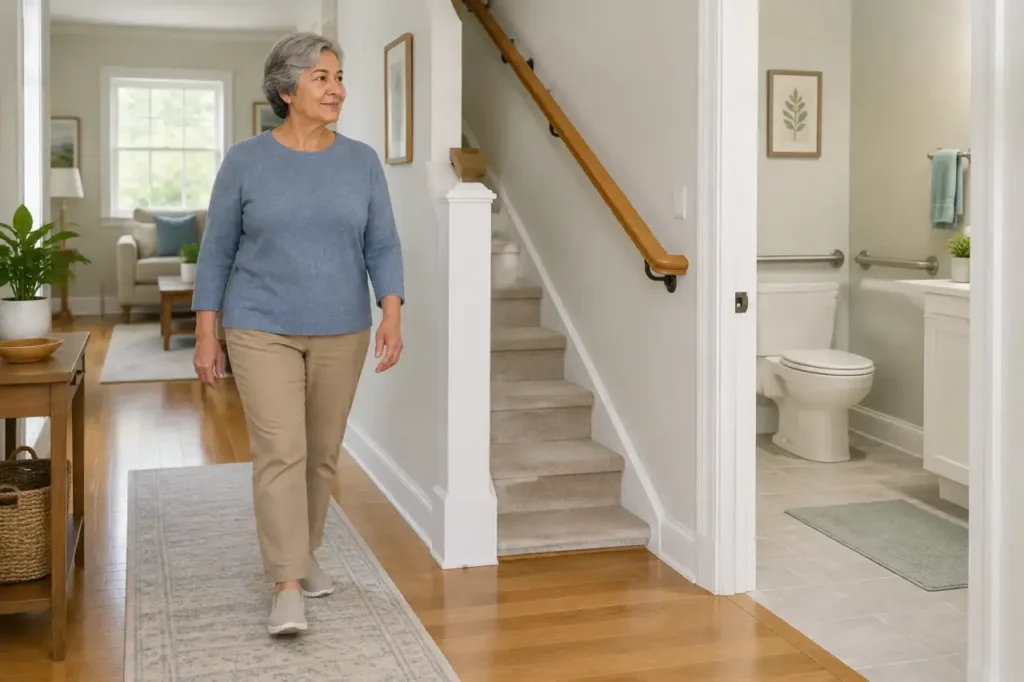
fall prevention for older adults — Illustration of an older adult in a home with clear walkways and support rails.
SHARE
Highlights
  • Regular exercise may lower fall risk by strengthening muscles and improving balance.
  • Removing tripping hazards and adding rails on stairs and in the bath can make homes safer.
  • Regular eye exams and enough calcium and vitamin D are part of the source’s prevention guidance.

Falls can happen at any age, but fall prevention for older adults deserves particular attention. Older adults are more likely to fall and to break a bone when they do, especially if they have osteoporosis. A broken hip can lead to disability and a loss of independence.

Contents
What can increase the risk of falling?Steps for fall prevention for older adultsUse regular exercise to support strength and balanceKeep up with eye exams and health careLook for ways to make the home saferBone health matters if a fall happensFrequently Asked QuestionsWhy are falls especially concerning for older adults?Can exercise help prevent falls?When should I ask a health care provider for advice?

The MedlinePlus guide to falls describes several ways to lower risk, including regular exercise, eye exams, and a safer home. This information can help older adults, family members, and caregivers understand what may contribute to falls and what concerns to discuss with a health care provider.
- Advertisement -
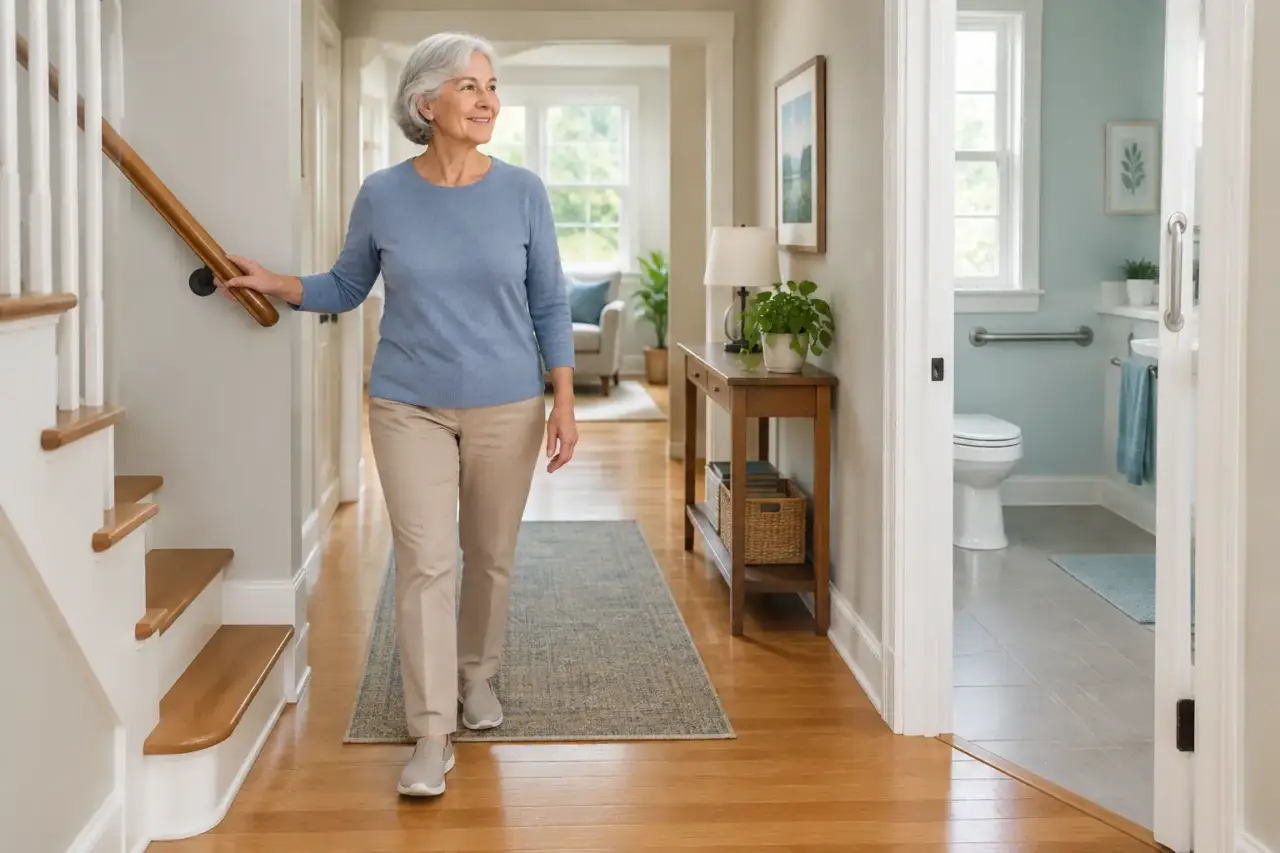
fall prevention for older adults — Illustration of an older adult in a home with clear walkways and support rails.

What can increase the risk of falling?

A fall may involve health problems, changes in physical abilities, or a loss of footing. MedlinePlus identifies several common causes:

  • Balance problems and muscle weakness: Weakness, especially in the legs, can make it harder to get up from a chair or stay balanced on an uneven surface.
  • Some medicines: Certain medicines can make a person feel dizzy, confused, or slow.
  • Vision problems: Problems with eyesight are another possible contributor.
  • Alcohol: Alcohol can affect balance and reflexes.
  • Certain illnesses: Low blood pressure, diabetes, and neuropathy are among the conditions associated with falls.
  • Slow reflexes: Slower responses can make it harder to keep your balance or move out of the way of a hazard.
  • Slipping or tripping: Losing footing or traction can cause a fall.

Understanding these contributors helps explain why prevention involves both personal health and the surrounding environment. Removing a tripping hazard addresses a different concern than improving muscle strength or getting an eye exam.

Steps for fall prevention for older adults

Use regular exercise to support strength and balance

Regular exercise may lower the risk of falls by strengthening muscles, improving balance, and keeping bones strong. These benefits are relevant to the muscle weakness and balance difficulties that can contribute to falls.

The MedlinePlus summary does not prescribe a particular exercise routine, frequency, or intensity. It provides a general reason to make physical activity part of fall prevention rather than a one-size-fits-all exercise plan.

- Advertisement -

Keep up with eye exams and health care

Taking care of your health, including getting regular eye exams, is another prevention step described by MedlinePlus. Because vision problems can contribute to falls, eye care belongs alongside strength, balance, and home safety in a prevention approach.

Medicines and health conditions may also play a role. Questions about dizziness, balance, vision, or medicine effects are reasons to contact a health care provider for advice about your health.

Look for ways to make the home safer

MedlinePlus recommends getting rid of tripping hazards and making sure there are rails on stairs and in the bath. These changes address the surroundings where a person moves through daily activities.

A practical starting point is to look for things someone could trip over and check whether stairs and bathing areas have rails. Home safety is one part of prevention; it does not replace attention to balance, vision, muscle strength, or other health concerns.

- Advertisement -

Bone health matters if a fall happens

Preventing a fall and reducing the chance of a fracture are related but distinct goals. Older adults with osteoporosis are especially likely to break a bone when they fall.

To reduce the chance of breaking a bone in a fall, MedlinePlus advises getting enough calcium and vitamin D. The summary does not give amounts or recommend a particular supplement. A health care provider can address questions about individual health needs.

Frequently Asked Questions

Why are falls especially concerning for older adults?

Older adults have a higher risk of falling and of breaking a bone in a fall. A hip fracture may lead to disability and loss of independence.

Can exercise help prevent falls?

Yes. MedlinePlus says regular exercise may lower fall risk by strengthening muscles, improving balance, and keeping bones strong.

When should I ask a health care provider for advice?

Contact a provider with questions about your health, including concerns about balance, dizziness, vision, or medicine effects. General fall-prevention information is not a substitute for professional medical care or advice.


- Advertisement -

You Might Also Like

Lays Baked Chips: A Look at Their Ingredients

Nothing Bundt Cakes Nutrition Facts Revealed

Does Lipton Tea Have Caffeine?: The Truth Behind The Brand

What Is Rubella and Their Causes, Symptoms, and Prevention

Hypertrophic Cardiomyopathy or HCM: Causes, Symptoms, Treatment

TAGGED:Balancebone healthFall preventionHome safetyOlder adults
SOURCES:MedlinePlus
Share This Article
Whatsapp Whatsapp LinkedIn Email Print
ByRahul Priydarss
Follow:
I am professional blog writer with more than 2+ year experience and write 300+ article on many website also publish my thesis on hydrogel.
Previous Article osteoporosis prevention — Illustration of middle-aged and older adults walking outdoors to support bone health. Bone health and osteoporosis prevention: A practical guide
Next Article asthma triggers — Illustration of a home with a pet and trees outside, representing possible asthma trigger exposures. Understanding asthma triggers and everyday prevention
Leave a Comment Leave a Comment

Leave a Reply Cancel reply

Your email address will not be published. Required fields are marked *

Find Us on Socials

- Advertisement -

Latest News

asthma triggers — Illustration of a home with a pet and trees outside, representing possible asthma trigger exposures.
Understanding asthma triggers and everyday prevention
Health Blog
59 minutes ago
osteoporosis prevention — Illustration of middle-aged and older adults walking outdoors to support bone health.
Bone health and osteoporosis prevention: A practical guide
Health Blog
2 hours ago
common anxiety symptoms — Illustration of an adult sitting at a kitchen table with hands together.
Recognizing common anxiety symptoms and when to seek help
Health Blog
14 hours ago
FDA neuroscience program — Illustration of a brain connected to abstract molecular structures and digital research patterns.
FDA neuroscience program launches with Alzheimer’s prevention focus
Neuroscience
5 days ago
//

We influence 20 million users and is the number one business and technology news network on the planet

Khaga PharmacyKhaga Pharmacy
Follow US
© 2026 khagapharmacy.com
  • Contact Us
  • Privacy Policy
  • Terms And Conditions
  • About Us
  • Affiliation
  • Disclaimer
  • Editorial Policy
  • Use Of Cookies
Welcome Back!

Sign in to your account

Username or Email Address
Password

Lost your password?