




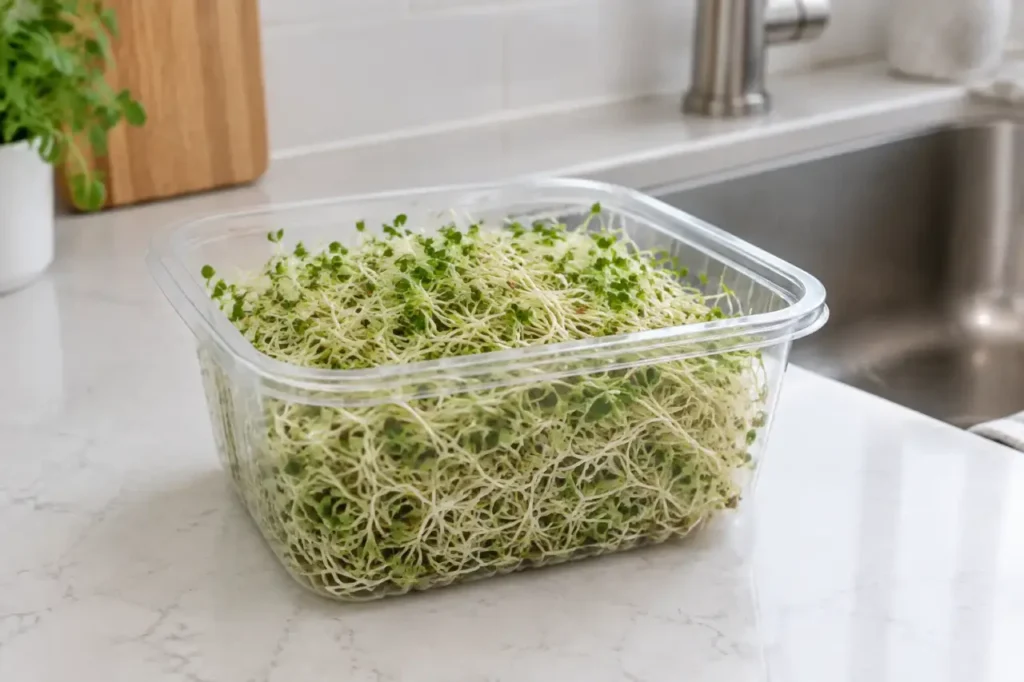
The CDC reported an alfalfa sprouts outbreak involving E. coli and Salmonella in an August 21, 2026, media alert. The agency said 55 people across 15 states had become ill, including two people who had both infections. Four people had been hospitalized, and no deaths had been reported.
The illnesses were linked to alfalfa sprouts grown by Everything Sprouts and sold under the Calco and Everything Sprouts brands at retailers and grocery stores. CDC advised consumers not to eat affected sprouts and businesses not to sell or serve them.
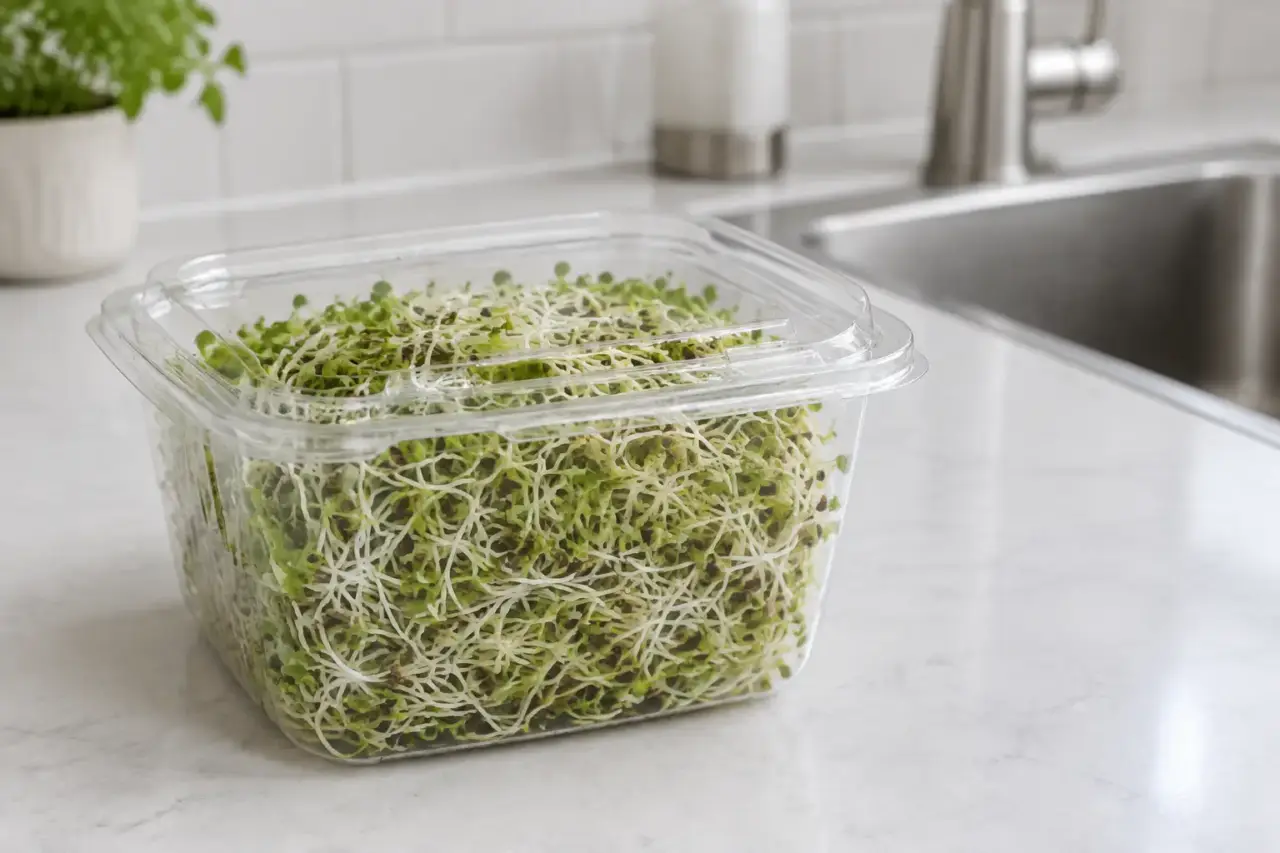
What CDC reported about the alfalfa sprouts outbreak
The agency’s official outbreak media alert describes a multistate investigation involving two different bacteria. The two people with both infections are included in the reported total of 55 people; they are not additional cases.
CDC said all of the reported illnesses were linked to alfalfa sprouts. The affected products identified in the alert were grown by Everything Sprouts and marketed under two brand names: Calco and Everything Sprouts. The alert does not identify individual retailers or list the 15 affected states.
CDC also noted that it has occasionally investigated multistate outbreaks involving more than one pathogen. It cited a 2019 gastrointestinal illness outbreak linked to oysters as an example.
Who may be affected
The product warning concerns people who have affected alfalfa sprouts, as well as retailers and other businesses that may sell or serve them. The notice identifies specific products and brands rather than describing every alfalfa sprout product as affected.
The alert also identifies groups that may experience more severe Salmonella illness: children younger than 5, adults 65 and older, and people with weakened immune systems. CDC said severe illness in these groups may require medical treatment or hospitalization.
For Shiga toxin-producing E. coli, the agency said some people may develop serious kidney problems called hemolytic uremic syndrome, or HUS, and need hospitalization. The alert does not provide a separate count of people with that complication in this outbreak.
Safety steps stated by CDC
For consumers
CDC’s instruction is not to eat any affected alfalfa sprouts. Consumers should throw them away or return them. The agency also says to wash items and surfaces that may have touched the affected sprouts, using hot soapy water or a dishwasher.
For businesses
Businesses should not sell or serve affected alfalfa sprouts. CDC says they should wash and sanitize items and surfaces that may have come into contact with those products.
Symptoms described in the notice
CDC says most people infected with Shiga toxin-producing E. coli experience severe stomach cramps, diarrhea that is often bloody, and vomiting. Symptoms usually begin three to four days after swallowing the bacteria. Most people recover without treatment after five to seven days.
For Salmonella, CDC lists diarrhea, fever, and stomach cramps as common symptoms. These usually begin six hours to six days after swallowing the bacteria. Most people recover without treatment after four to seven days. These descriptions are general information from the agency, not a diagnosis of any reader’s symptoms.
When to consult the official notice
Readers should consult the linked CDC notice when checking which products the agency identifies as affected, reviewing its safety instructions, or looking for the detailed outbreak alert referenced there. The figures in this explainer reflect the August 21 media alert. For questions about cases in a particular state, CDC directs readers to that state’s health department.
Frequently Asked Questions
Which sprouts did CDC identify?
CDC identified affected alfalfa sprouts grown by Everything Sprouts and sold under the Calco and Everything Sprouts brands.
How many people were reported sick?
The August 21 alert reported 55 people across 15 states, including two with both infections. Four were hospitalized; no deaths were reported.
What should consumers do with affected sprouts?
CDC says not to eat them. Throw them away or return them, and wash items and surfaces they may have touched using hot soapy water or a dishwasher.