


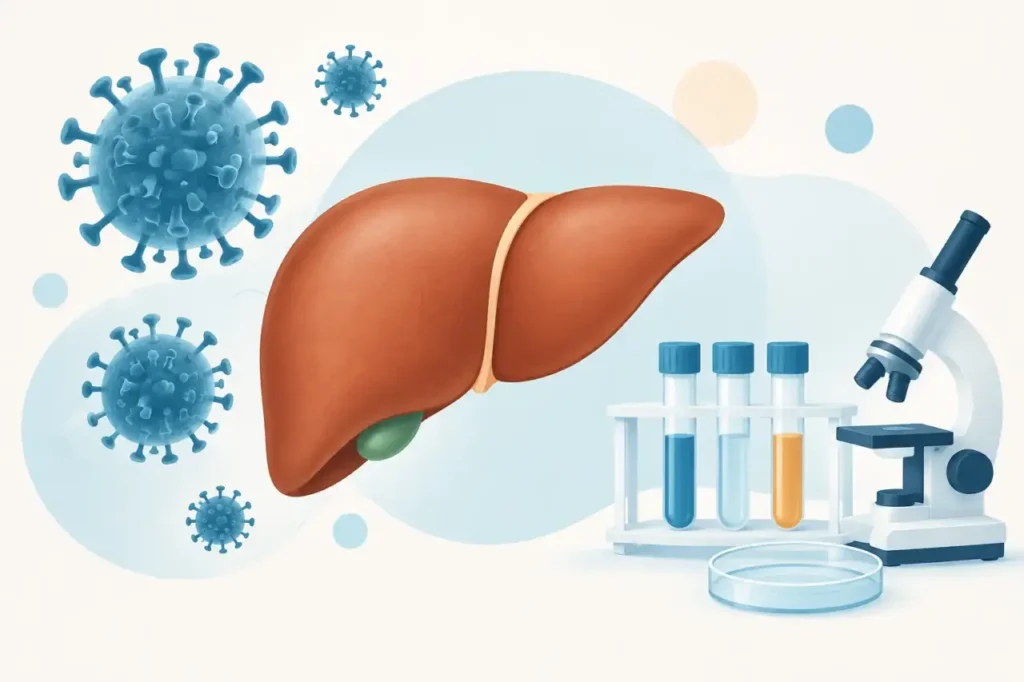
The U.S. Food and Drug Administration approved Hibsago (bepirovirsen) injection on October 20, 2026, as a chronic hepatitis B treatment used alongside existing antiviral therapy. The approval applies to certain adults without cirrhosis who meet specific treatment and laboratory requirements. It does not apply to everyone with hepatitis B.
According to the FDA’s approval announcement, Hibsago is the first FDA-approved antisense oligonucleotide for chronic hepatitis B. It offers some patients the possibility of maintaining control of the infection after all hepatitis B treatment ends, but it also carries serious safety warnings.
Who qualifies for this chronic hepatitis B treatment?
Hibsago is approved for adults without cirrhosis who have taken hepatitis B antiviral therapy for at least six months and have suppressed levels of hepatitis B virus (HBV) in their blood. They must also have hepatitis B surface antigen, or HBsAg, levels of 3,000 IU/mL or less, measured by an FDA-authorized test.
These criteria make the announcement particularly relevant to adults already receiving antiviral treatment. Having chronic hepatitis B alone does not establish eligibility; treatment history, blood test results and the absence of cirrhosis all matter.
The FDA also authorized the Roche Elecsys HBsAg II quant II RxDx assay as a companion diagnostic. The test helps select patients for treatment in accordance with FDA-approved labeling and assists with monitoring during treatment.
How Hibsago works and fits into existing care
Chronic hepatitis B is a long-term liver infection caused by HBV. Over time, it can lead to serious liver disease, including cirrhosis, and increase the risk of liver cancer.
Hibsago targets the genetic instructions the virus uses to make copies of itself and produce viral proteins. This helps reduce the amount of virus and hepatitis B surface antigen in the body.
The medicine is injected under the skin for up to 24 weeks while patients continue their existing hepatitis B antiviral medicine. Patients continue that existing medicine for at least 24 weeks after the final Hibsago injection. Some may then be able to stop it if they meet specific health and laboratory requirements. The approval does not mean existing antiviral treatment ends when the injections end.
What the clinical trials showed
Researchers evaluated Hibsago in two trials comparing it with placebo, an inactive treatment. Across the trials, 24% of patients receiving Hibsago met the requirements to stop their existing antiviral medicine, compared with none receiving placebo.
Twenty-four weeks after stopping all hepatitis B treatment, 19% of Hibsago recipients still had the virus under control and had no detectable HBsAg in their blood.
These findings describe two different milestones: qualifying to stop existing medicine and maintaining the reported response afterward. They do not establish that every eligible patient will be able to stop treatment or maintain control without it.
Serious risks require medical monitoring
Hibsago carries a boxed warning for serious liver reactions and low platelet counts. Low platelet counts can increase the risk of potentially life-threatening bleeding.
Other warnings include worsening kidney function, serious inflammatory reactions such as vasculitis, and serious risks if the injection is administered improperly. The most common side effects, excluding laboratory abnormalities, are injection-site reactions, fever, fatigue and headache.
The FDA says patients need regular blood tests and follow-up with their healthcare provider before and during treatment. Decisions about eligibility, safety monitoring and whether treatment can end require professional assessment of the applicable health and laboratory requirements.
Frequently Asked Questions
Is Hibsago approved for people with cirrhosis?
No. This approval is for certain adults without cirrhosis who also meet antiviral treatment and laboratory requirements.
Does Hibsago immediately replace existing hepatitis B medicine?
No. It is used alongside existing antiviral therapy, which continues for at least 24 weeks after the final injection. Only some patients may later qualify to stop it.
What monitoring is needed?
Patients need regular blood tests and healthcare-provider follow-up before and during treatment because of serious risks, including liver reactions and low platelet counts.